
The National Museum of Ireland’s collections team created an online gallery called ‘Reflections on Resilience’, bringing together objects from across the museum’s collections that tell stories of resilience — Irish and global, ancient and modern.
We’ve picked out 7 fascinating items from the National Museum of Ireland’s online collection ‘Reflections on Resilience’. Take a look and see what you think!
Don’t miss our best content straight to your inbox! Sign up now and get our FREE newsletters packed with fun ideas and things to do with the kids, family-friendly recipes, expert advice, parenting tips and great competitions.
The National Museum of Ireland is Ireland’s largest cultural institution, and its collection ranges across archaeology, natural history, decorative arts and social history. The ‘Reflections on Resilience’ gallery draws on all of these, pulling together a diverse range of objects and specimens that demonstrate our collective resilience in the face of challenges.
From the historic to the contemporary, each of these items has its own story to tell.
Fascinating Items From The National Museum of Ireland Online Collection: Reflections on Resilience
#1. Albert Sutton’s Photo Album

Albert Sutton was born in 1921 in Clontarf, Dublin. Without his parents’ knowledge, he enlisted in the RAF just as the Second World War was beginning.
His photo album, bequeathed to the National Museum of Ireland, depicts life in the RAF during the war.
It showcases scenes of people and places affected by the conflict — airplanes, airbases, colleagues, European cities and special occasions such as Christmas and weddings.
It also contains glimpses into the horrors of war. On April 15th, 1945, Albert Sutton was one of the first of the Allied forces on-site at the Bergen-Belsen Concentration Camp in Lower Saxony, helping to liberate the survivors of the Holocaust. It is a true representation of the resilience of people during adversity.
You May Also Enjoy 100+ Educational (and Fun) Online Learning Resources For Kids
#2. Flint Mace Head

Dating from 3300–2800 BC, this highly decorated flint mace-head was found in a burial tomb at Knowth, Co. Meath.
Showcasing the talent of the craftsman who made it, this piece illustrates how, in Neolithic times, people created ornate objects to use in ceremonies and rituals to make sense of life and death.
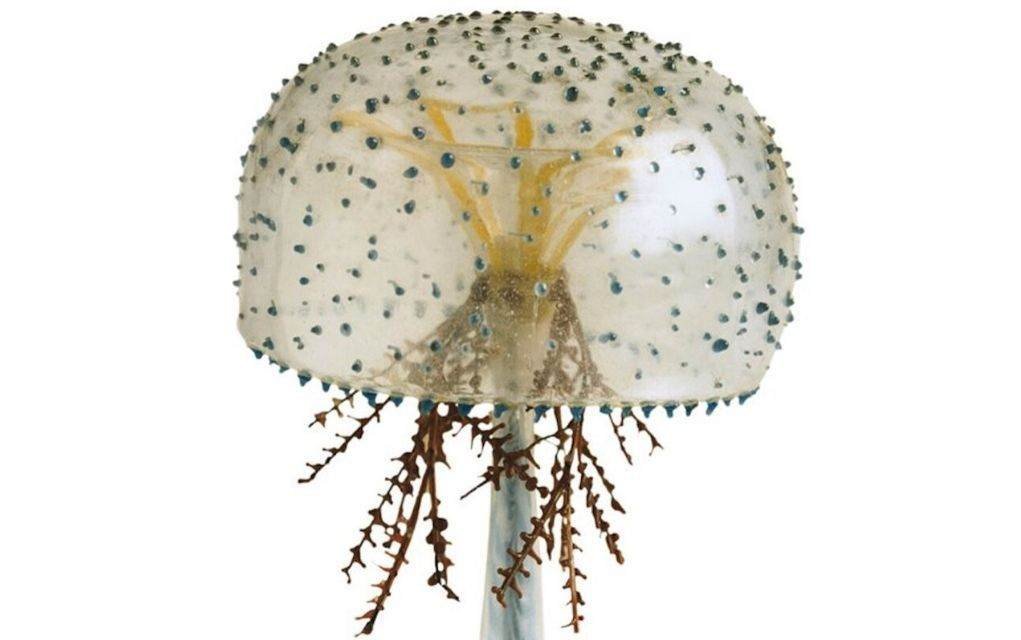
#3. Jellyfish

Did you know that jellyfish have been on Earth for more than 500 million years? Although they don’t have bones, a brain, a stomach or lungs, they are extremely resilient creatures.
As you’ll know if you’ve ever encountered one while swimming, they have long tentacles containing stinging cells, which they use to entangle their prey and stun it.
There are many different types of jellyfish, but the ones most commonly seen off the coast of Ireland include the moon jellyfish, compass jellyfish, barrel jellyfish, mauve stinger, blue jellyfish and, more recently, the lion’s mane jellyfish.
The National Museum of Ireland has over 500 glass models like the one pictured, as well as jellyfish preserved in jars for visitors to see.
You May Also Enjoy 10 Hugely Entertaining and Educational Podcasts For Kids
#4. Panti Bliss’ Noble Call Speech Dress

Taken from more recent times, the Noble Call speech dress was worn by Panti Bliss (aka Rory O’Neill) on the night of February 1st, 2014. That night, at The Abbey Theatre, she gave an impassioned speech about her experience of homophobia and oppression in Ireland.
The dress represents a number of things:
- The Noble Call speech made by Panti Bliss on the stage of the Abbey Theatre on the night of 1 February 2014
- Her struggle to be accepted as equal in Irish society
- The passing of the Marriage Equality Referendum in 2015
- More broadly, the decades-long struggle of the entire Irish LGBTI+ community for human and civil rights in the Irish state
#5. Sea Sponge

Did you know that sea sponges are an ancient group of animals, around for more than 543 million years?
They come in a huge variety of sizes, shapes and colours. They’re multicellular animals that can move, and even when broken down, they can reform when left in seawater. They use chemical defences to protect themselves against predators, containing bioactive properties such as anti-inflammatory and anti-toxin compounds.
Next time you’re out rock-pooling, keep an eye out for them in pools and along the shore.
You May Also Enjoy Fun Energy Learning Activities and Resources for Kids
#6. Mesolithic Fish Trap

Fish traps like this one were used by Ireland’s earliest settlers between 4970 and 5210 BC. This example is a replica of one discovered at a fishing site in Meath, showing how early settlers combined their knowledge of fish behaviour with their skill in woodworking to create a woven, basket-style trap.
The original is on display in the Prehistoric Ireland collection at the National Museum of Ireland – Archaeology, Kildare Street, Dublin.
#7. ‘Ireland Invites You’ Travel Poster from 1953

This Irish travel poster from 1953 was designed by Dutch artist Guus Melai, who worked for the publicity department of airline KLM.
It depicts a man in the costume of the Aran Islands, weaving a traditional belt known as a ‘crios’, with men carrying a traditional currach fishing boat towards the sea.
It was issued by Fógra Fáilte, which at the time handled publicity for the Irish Tourist Board, Bord Fáilte Éireann. Entitled ‘Ireland Invites You’, it deliberately has no strapline or logo, allowing companies to add their own for their own publicity purposes.
More Fascinating Items To Spot
We hope you enjoyed our selection from the National Museum of Ireland’s Reflections on Resilience online gallery. Do check out the full gallery, as there are even more fascinating items to discover, including graffiti from Viking times and a GAA raffle ticket from 1940.
Over to you now — do you have a favourite piece from the National Museum of Ireland’s online collection? Let us know in the comments below.

Frequently Asked Questions
What is ‘Reflections on Resilience’?
It’s an online gallery from the National Museum of Ireland, bringing together objects and specimens from across its collections that reflect resilience — both from an Irish and a global perspective.
Can I see these items in person?
Some of the objects featured here are also part of the museum’s physical displays — the original Mesolithic fish trap is on show in the Prehistoric Ireland collection at the National Museum of Ireland – Archaeology on Kildare Street, Dublin, and the museum holds glass jellyfish models and preserved jellyfish specimens on site too. Others featured in this piece are part of the online gallery.
How many items are in this feature?
We’ve picked out seven items here, but the full ‘Reflections on Resilience’ gallery includes many more, from Viking-era graffiti to a 1940s GAA raffle ticket.
Where can I explore the full online gallery?
You can browse the complete ‘Reflections on Resilience’ collection on the National Museum of Ireland’s website, linked throughout this article.
You Might Also Like
- 100+ Educational (and Fun) Online Learning Resources For Kids
- 10 Hugely Entertaining and Educational Podcasts For Kids
- Fun Energy Learning Activities and Resources for Kids
Loved exploring these pieces? Bookmark this page or share it with a fellow museum-lover, and browse our site for more family-friendly ideas for things to do together.
Want more ideas like this delivered to your inbox every week? Sign up for the Mykidstime newsletter for fun activities, family days out, expert parenting tips and great competitions.