Whether it’s daily homework, revision before exams, or the occasional day of learning at home, having a proper space set up can make a big difference to how well your child concentrates and gets their work done.
Don’t miss our best content straight to your inbox! Sign up now and get our free newsletters packed with fun ideas and things to do with the kids, family-friendly recipes, expert advice, parenting tips and great competitions.
Lots of parents find themselves juggling similar questions when it comes to home learning:
- How can I avoid things being mislaid between home and school?
- How can I keep school books and supplies clean and in good condition?
- What ‘extras’ do I need to have on hand at home?
- How will I keep my child motivated to work at home?
Creating a space where your child can concentrate, learn and get their work done really does help keep everyone on track. Here are 7 tips to help you set one up.
How to Create a School Space at Home
1. Set Aside a Dedicated Space
Whether you have a desk ready to use or your child will be working at the kitchen table, the most important thing is to clear a space and prepare it for your child to work at.
Ideally, the space would be well lit, with a surface to work on and a comfortable seat. Books and supplies your child will need should be easily accessible and, depending on your child’s age, you may be helping and sitting with them too.
Just as they would have a desk at school, this is their space to learn.
2. Organising Your Child’s School Books
In Ireland, most schoolbooks for primary and post-primary students are now provided by the school on a loan basis, so there’s no need to buy or order them each year. Books belong to the school and are returned at the end of the year, so it’s worth teaching your child to look after them — a good book cover can help keep loaned books in decent condition. Post-primary schools may ask for a small refundable deposit on some items, returned once the books come back.
For books or materials that travel between home and school, find a regular spot for storage. If you don’t have room on a bookshelf or in a drawer, keeping them in your child’s school bag can help avoid anything being mislaid.
Families outside Ireland should check what applies locally, as schoolbook schemes vary from country to country.
3. Stock Up On Essentials

Pick up some extra stationery essentials so that you have all the necessary pens, pencils, copybooks, colouring supplies and so on at home too.
Some parents like to keep a separate pencil case for home, so there’s less back-and-forth between school bag and home desk. This also has the added benefit of reducing the “I forgot it” response!
4. Start on Time
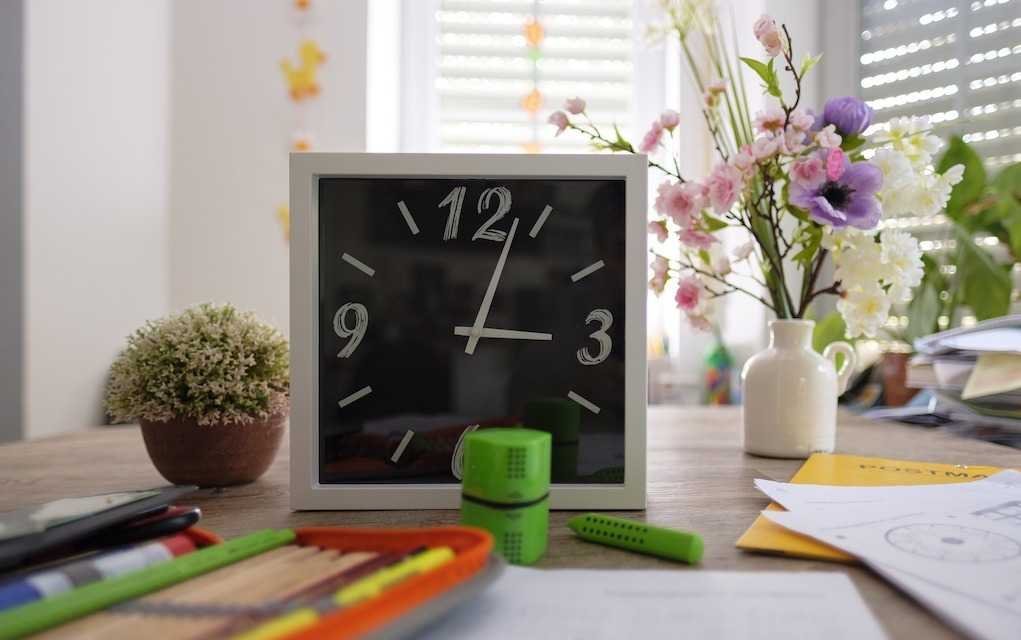
When it comes to schooling or homework at home, it helps to treat it like any other part of the school day. Rather than a relaxed, whenever-we-get-to-it approach, your child will benefit from a consistent schedule.
Where possible, sit down to their school space at home at a similar time each day. These small consistencies help to provide structure, even on days that feel a bit different from the usual routine.
5. Keep Distractions to a Minimum
At school, there are few distractions beyond the rest of the class. There’s no TV on in the background, music playing, favourite toys within reach, or the family dog wandering by.
Your child’s school space at home should aim for the same. Where possible, keep the distractions to a minimum.
6. Keep the Routine

At school, the day is broken up with snack time, breaks to play, lunch, and lessons that usually run in 30–45 minute segments. You don’t need to copy the school timetable exactly, but it’s a good idea to break home learning time up in a similar way.
When we first tried schoolwork at home, I let my daughter work for as long as it took her to finish. What I found was that she lost interest, got distracted, was up and down from the table, and everything took far longer than it needed to.
So I tried setting a time limit, much like a class period at school. Each “session” was a set amount of time — 20 to 30 minutes worked for us — and if we didn’t get everything done, we came back to it later.
Rather than dragging work out over hours, things became noticeably more focused and productive. She finished earlier and was happy to go and play or read, and I could get on with my own day without feeling like every task was a battle.
7. Separate Home and School
At the end of learning time, pack away books and pencil cases and make a real separation between “school” and “home”. This small habit helps signal that work time is over, and it’s much easier to switch off for the rest of the day.
Frequently Asked Questions
How much space do I actually need for a home school space?
Not much — a small desk, a corner of the kitchen table, or even a tidy tray system can work well. What matters more than size is having a consistent, well-lit spot with the right supplies close by.
What age is a home school space suitable for?
This works for any age, from junior infants doing short reading practice to secondary students revising for exams. Just adjust the length of work sessions and level of supervision to suit your child.
How long should a home learning session last?
Shorter, focused sessions tend to work better than long, open-ended ones. Many parents find 20–30 minute blocks, with short breaks in between, help keep children on task without losing interest.
Do I need to buy new schoolbooks every year?
In Ireland, schoolbooks for primary and post-primary students are generally provided by the school as part of a loan scheme, so buying new books each year usually isn’t necessary. Check with your child’s school for specifics, as arrangements can vary.
Related Articles
- Back to School Tips for Parents
- How to Help Your Child With Homework
- Setting Up a Reading Nook at Home
Save These Ideas
Want to come back to these tips later? Save or bookmark this article, or browse more learning and homework ideas on MyKidsTime for extra inspiration when it’s time to set up your child’s space.
Get More Ideas Like This
Want more practical tips for learning, homework and family life? Sign up for our free weekly newsletter and get fun ideas, expert advice and parenting tips straight to your inbox — no pressure, just useful stuff when you need it.