
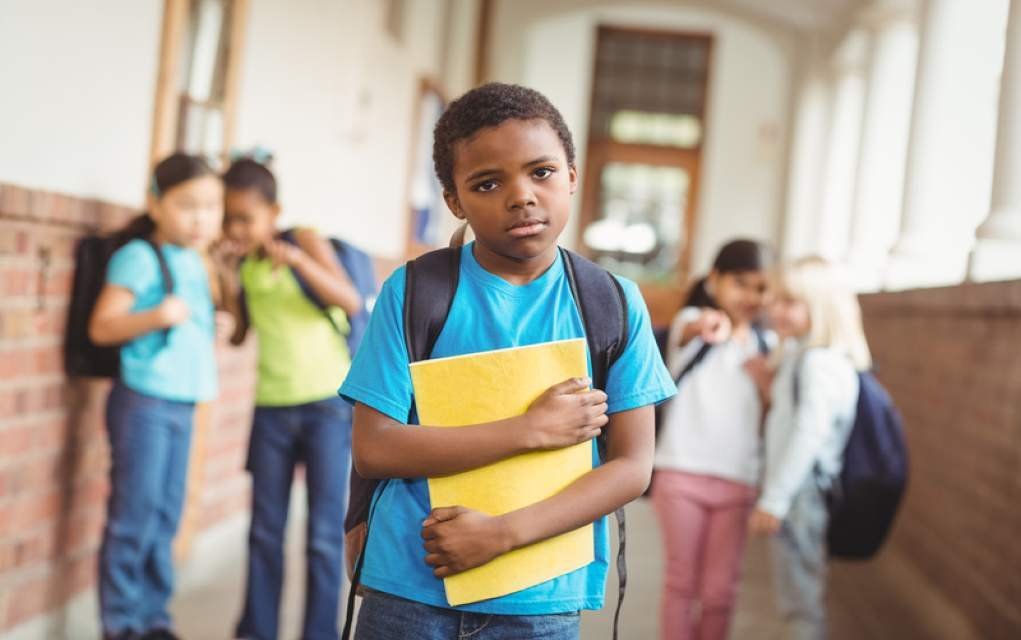
Worried your child might be being bullied? Here are 9 practical tips on how to bully-proof your child, and support their mental health and emotional wellbeing along the way.
Often it’s parents of easy-going, gentle children who worry most about whether their child can stand their ground if faced with teasing or aggressive behaviour from other kids.
Joan loves her child’s laid-back and gentle nature, but she’s worried because he gives in when other kids demand their way.
He lets them take the toy he was playing with.
He lets them dictate what game they play.
Will he end up being bullied if he doesn’t know how to stand up for himself?
“How do I bully-proof my child?” she asks. “I’ve noticed little incidents recently, where other kids take advantage of him.”
The good news is that these upsets are a great opportunity to help your child learn assertive behaviour, which is essential if you want to bully-proof them.
You might also find What To Do If Your Child is Being Bullied or is a Bully useful.
9 Practical Tips On How to Bully-Proof Your Child
#1. Don’t rescue your child – champion your child

One of the dangers of jumping into a situation and speaking up for your child is that you end up rescuing them rather than supporting them. When you repeatedly rescue, you risk creating a victim mentality. You may unintentionally give your child the message that they can’t stand up for themselves, reinforcing a helpless mindset and passive behaviour.
Of course, there’s a time when it’s essential to step in — especially when there’s a major power difference, such as an older or bigger child, or an adult, bullying your child.
When you champion your child rather than rescuing them, you help them feel confident and able to respond to life’s challenges themselves.
#2. Keep calm – only intervene if essential – and observe
Note what’s unfolding in the incident:
- What was happening before the upset?
- Who said what?
- What was the tone and strength of each child’s voice?
- What was the body language of those involved?
- What was said?
- Was there any negotiation?
- How developed were your child’s language skills in holding their own?
- How was the situation resolved? Or was it?
- What happened afterwards?
Now imagine what your child could have done differently to create a different outcome.
If there’s a pattern of similar incidents, try to notice when they happen. For example, does it tend to occur when your child is hungry or tired? Dealing with underlying issues can make a big difference to how well your child handles socially tricky moments.
#3. Be aware of your child’s temperament – and your own

A child with a calmer temperament might choose to handle a situation differently than you would. That doesn’t make it “wrong”. When we understand our child’s temperament, and our own, we better understand what’s actually needed. Watch this six-part YouTube series exploring your child’s unique temperament.
A laid-back child is likely to stay laid-back. It’s not about trying to change who your child is, but rather asking: what small shift would create a more helpful outcome?
You might also enjoy reading 6 Insights Every Parent Needs To Raise an Independent Child
#4. Imagine what your child’s assertive behaviour might look like
Picture your child handling the situation differently.
How might they stand up for what they need, without tipping into aggression? Now think about the social skills you’d like to help them develop for similar situations in future.
Thinking this through before you talk to your child gives you a much clearer sense of what might actually help.
#5. Talk about the incident with your child

Create a calm, safe space to chat about what happened. Make sure you’re centred yourself, so you’re not coming from a reactive place.
If your child is upset about the incident, or becomes upset while talking about it, focus on soothing them first — they can’t think clearly or creatively to find a solution until they’re calm.
You might also enjoy reading 7 Valuable Insights on How to Calm Anxiety in Your Child
#6. Use role-play to help your child discover how to handle situations differently
It’s amazing how much body language, posture and tone of voice affect whether a child gets bullied or not.
One sweet little girl in an early education setting was unhappy because other children weren’t respecting her space. “Leave me alone,” she’d say — but so timidly that the other children ignored her.
Time spent role-playing helped her move from a little squeaky voice to a confident “big voice” to say what she needed, without being aggressive. The other children responded to her once she was assertive.
#7. Use storytelling or toys to explore and develop bully-proof behaviour
Children can be inspired by your “When I was little…” stories, if you share how you handled a challenging situation yourself.
Acting out a situation with toys can also be a helpful strategy with younger children. Or use your imagination to create stories about animals, where some act in “not okay” ways and the hero learns to say what they need while still being kind.
You can even have the animal ask your child, “What could I do now?” It’s often easier to problem-solve someone else’s story objectively — and children can transfer that learning to their own situation.
#8. Consider contact sport for your child

This can be a helpful strategy with older children. Some parents find that once their child took up a physical contact sport, like judo, they developed a noticeably more confident approach and stature — and children who had tended to bully them left them alone as a result.
#9. Reflect on your parenting style
Helping your child learn to be assertive might also mean taking a long, honest look at your own parenting. If you encourage your child to be compliant — even through rewarding that behaviour — they don’t learn how to set their own boundaries. This passive pattern can increase the likelihood of being bullied.
For instance, if a child doesn’t want to share a toy with a younger sibling, a parent might say, “Oh, be a good boy, share with your brother.” Repeated often enough, this tells the child it’s not okay to protest or hold a boundary.
If instead they learn other tactics — like distracting the toddler with another toy, or moving their toy somewhere the toddler can’t reach — they develop a sense of how to hold their own boundaries assertively, while still being respectful of others.
You might also enjoy reading 5 Practical Tips To Help Overcome Anxiety in Kids
Bullying Incidents Can Be a Learning Opportunity
Upsetting incidents, like the one Joan described, can actually be a gift.
They’re a chance to help your child become a pleasant, assertive person who knows how to take care of themselves while remaining respectful of others. This is core to emotional wellbeing and mental health.
Over to you now: which of these strategies resonates most with you? What else works for you to bully-proof your child? Share your experiences in the comments below — it helps other parents find solutions too.

Frequently Asked Questions
What’s the difference between rescuing my child and championing them?
Rescuing means stepping in and speaking for your child, which can leave them feeling helpless. Championing means supporting and encouraging your child to handle the situation themselves, building their confidence to respond to challenges on their own — while you still step in immediately if there’s a serious safety or power imbalance.
Does my child’s temperament affect how I should respond to bullying?
Yes. A naturally calm or laid-back child will likely always be more laid-back, and that’s not something to try to change. The goal isn’t a personality overhaul — it’s finding the small, realistic shifts in behaviour that help your child respond more effectively while staying true to who they are.
How can role-play actually help with bullying?
Practising tone of voice, body language and simple assertive phrases at home, away from the pressure of a real situation, gives your child the confidence and muscle memory to use them when it counts. Even small changes — like using a stronger, clearer voice — can change how other children respond.
Related Articles
- What To Do If Your Child is Being Bullied or is a Bully
- 6 Insights Every Parent Needs To Raise an Independent Child
- 7 Valuable Insights on How to Calm Anxiety in Your Child
- 5 Practical Tips To Help Overcome Anxiety in Kids
Save These Tips for Later
No printable this time, but it’s worth bookmarking this article or saving it to your parenting folder so you can come back to these strategies whenever you need them. Browse our other family life articles for more practical, everyday parenting ideas.
Don’t Miss Our Best Content
Get more useful parenting ideas like this straight to your inbox. Sign up for our free newsletter for fun things to do with the kids, family-friendly recipes, expert advice, parenting tips, and great competitions — delivered weekly.