
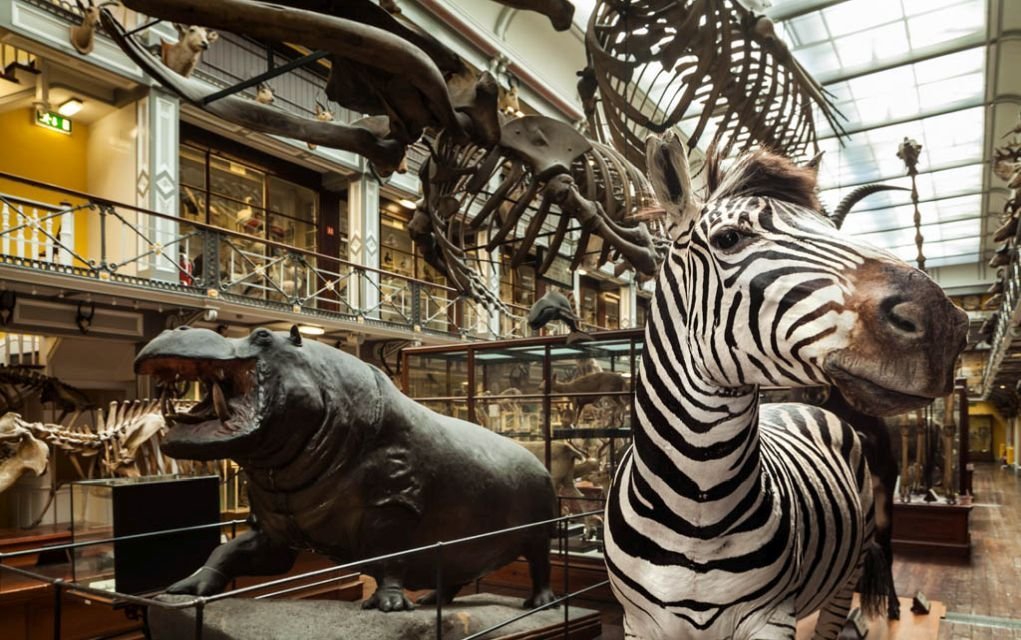
Dublin families will know the National Museum of Ireland – Natural History well, even if only by its nickname: “The Dead Zoo.” Tucked just off Merrion Square, the museum opened its doors in 1857 and has kept much of its original Victorian charm ever since. It gets its nickname from the hundreds of preserved animals on display, and it’s a brilliant, free-to-explore way to introduce kids to the natural world, close up.
The museum also runs regular family events and workshops built around different Natural History themes, so it’s always worth checking what’s on before you go.
Next time you visit, keep an eye out for these 11 unique animals!
In the Irish Room on the Ground Floor
#1. Giant Irish Deer

These fossil skeletons hold the record for having the largest antlers of any deer species — a pair can reach lengths of 4m! How many of these giant deer can you find in the museum?
#2. Peregrine Falcon

See the amazing peregrine falcon in the birds of prey display in the Irish Room. Did you know it’s the fastest animal in the world, reaching speeds of 250km per hour during its hunting dive? Faster than a cheetah, but much smaller!
#3. Rabbits

Find the rabbit diorama in the Irish Room. These animals can live in large groups of up to 30 rabbits and dig underground burrows called a warren.
#4. Basking Shark

Yes, there really is a basking shark on display. It’s real, and it’s been hanging from the ceiling for well over a century. This shark is about 7m long, but basking sharks can reach up to 12m — about the length of a double-decker bus!
#5. Butterflies

For anyone with an interest in creepy crawlies, check out the insects and bugs at the back of the Irish Room. The insect collection makes up over half of all the specimens in the museum and includes a selection of the many butterfly species found in Ireland. Which one is your favourite?
#6. Pilot Whale Skull in the Discovery Zone
See if you can spot the skull on the blue cart in the Discovery Zone — and don’t forget to smell and touch it! Ireland’s waters are home to many whale and dolphin species, and this pilot whale skull gives a great sense of their size and shape.
In the Mammals of the World Exhibition on the First Floor
#7. Zebra

When you find the zebra, take a good look up close at the horizontal and vertical black-and-white stripes of this beautiful animal, usually found on the African plains. (Remember: look, don’t touch!)
#8. Fin Whale

Stand underneath the second-largest whale in the world! This whale skeleton hangs from the ceiling and measures about 20m long. It stranded itself in Bantry Bay, Co. Cork, over 200 years ago. Do you know the name of the largest whale in the world?
#9. Giraffe
 Photograph by Paul Sherwood
Meet Spotticus the giraffe! A fully grown male giraffe can reach nearly 6m from the ground to the tips of its horns. Spotticus stands about 3m tall and is an impressive sight above the other exhibits.
#10. Asian Elephant
 Photograph by Paul Sherwood
Stand beside the elephants on display and see how you compare to the biggest land animal on the planet!
#11. Tiger

Get up close to the striped coat of the tiger — no two tigers have the same pattern, just like our fingerprints. With so few tigers left in the wild, this is an endangered species facing real threats to its survival.
Please do not touch any of the exhibits, unless a sign tells you otherwise.
Visitors are asked not to touch the animals mainly because of wear and tear over time, not because there’s any risk from the specimens on display. Some of the older specimens in the museum were treated with chemicals, including arsenic, as part of the taxidermy process over a century ago. Most of the animals you’ll see today — like the giraffe, zebra, moose and antelopes — are much more recent and were never treated with anything like this.
Look closely at the baby zebra or the “bald tapir” behind glass, and you’ll see what years of handling can do: patches of worn fur, polished to a leather-like shine. Touch the elephant, walrus or rhino models and you might find your fingers stick slightly, since these were treated with oils in the past. At least none of the animals bite!
The pilot whale skull on the activity cart in the Discovery Zone is different — it’s part of the museum’s handling collection, and everyone is welcome to pick it up, smell it and give it a proper touch.
Planning Your Visit
The National Museum of Ireland – Natural History is located just off Merrion Square in Dublin 2. Opening hours, admission details and any seasonal closures can change, so it’s worth checking the museum’s official website before you set off, especially around holidays.
While you’re there, ask at the desk about any activity sheets available for kids — they’re a lovely way to make a visit feel like a mini treasure hunt. And it’s always worth checking the museum’s calendar of events for family-friendly workshops and talks happening during your visit.
Frequently Asked Questions
What is the National Museum of Ireland – Natural History nicknamed, and why?
It’s affectionately known as “The Dead Zoo,” a nickname that comes from the huge collection of preserved and taxidermy animals on display throughout the building.
Where is the museum located?
It’s just off Merrion Square in Dublin 2, within easy reach of Dublin city centre.
What are some of the most unique animals to spot at National Museum of Ireland Natural History?
Highlights include the giant Irish deer with its enormous antlers, a real basking shark suspended from the ceiling, a fin whale skeleton, Spotticus the giraffe, and a striking tiger display — alongside smaller favourites like the rabbit diorama and Ireland’s native butterflies.
Can kids touch any of the exhibits?
Most exhibits are look-only, to protect them from wear over time. The one exception is the pilot whale skull in the Discovery Zone, which is part of the handling collection and is there specifically to be touched, smelled and explored.
Is this a good day out for younger children?
Yes — the mix of dramatic skeletons, colourful dioramas and hands-on moments in the Discovery Zone tends to appeal across a wide age range, from toddlers to older kids fascinated by facts and figures.
How do I check current opening hours or admission details?
Because these can change, it’s best to check directly on the museum’s official website before you travel, particularly around bank holidays or school breaks.
You Might Also Like
- Free Museums and Galleries to Explore with Kids in Dublin
- Best Free Family Days Out in Dublin
- Fun, Free Family Events Happening at Ireland’s National Museums
Looking for more ideas like this? Browse our full collection of family days-out inspiration on MyKidsTime, or save this one to come back to before your next museum trip.
Never Miss a Family Day-Out Idea
Want more ideas like this dropped straight into your inbox? Sign up for the MyKidsTime newsletter for weekly, parent-tested ideas for things to do with the kids — free days out, activities, and family-friendly events near you.