
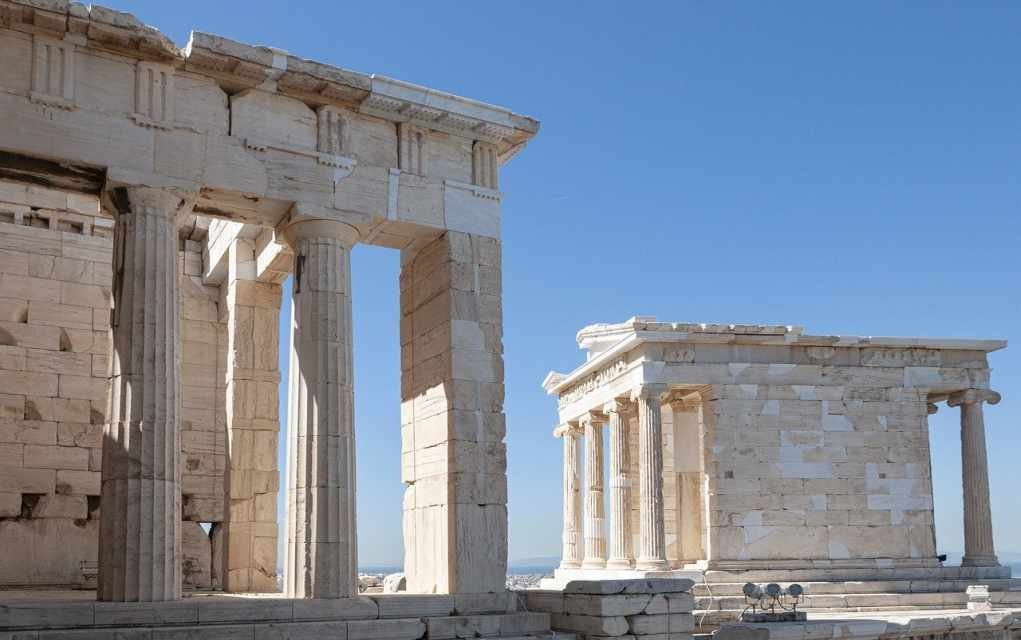
Ancient Greece is one of the most fascinating periods in history, and it’s packed with stories kids genuinely love — gods and goddesses, epic battles, the birth of the Olympic Games, and the very first democracy. Whether you’re a parent looking for something fun to explore together at home or a teacher after a few extra nuggets for the classroom, these fun facts about Ancient Greece for kids are a great place to start.
Get comfortable and get your brain in gear — here’s everything you need to know about this beautiful, sunny land and its incredible history. Feel free to share these facts with your class or friends, and use them as a springboard for more exploring.
A Quick History of Greece
Greece has a long and surprising history. Here’s a quick brush-up on some of the key moments.
- The first great civilisation in Greece was the Minoan culture on the island of Crete, around 2000 B.C. — a very long time ago indeed. Wall paintings found at the ruins of the palace of Knossos show people doing backflips over a charging bull. The Minoans were eventually conquered by the Mycenaeans from the mainland around 1450 B.C.
- In ancient times, the country was divided into separate city-states, each ruled by its own noblemen. The largest were Athens, Sparta, Thebes and Corinth. Each state controlled the area around a single city, and they were often at war with one another.
- Athens became the most powerful of these city-states, and in 508 B.C. its people came up with a whole new system of ruling — what we now know as democracy. This meant people voted for their leaders. It’s where the idea of democracy began, though at the time only men were allowed to vote, so it wasn’t quite the democracy we know today.
- Greece was ruled by outsiders for over 2,000 years — first by the Romans from the 2nd century, and later by the Ottoman Turks for nearly 400 years. It wasn’t until 1832 that Greece became an independent nation again, ruling itself for the first time in centuries.
The Olympic Games

The first ever Olympic Games were held in the Greek city of Olympia in 776 B.C., in honour of Zeus, king of the gods. Only men were allowed to compete, in events such as sprinting, long jump, discus, javelin, wrestling and chariot racing.
The Games were eventually banned by the Romans in A.D. 393, but they were revived in Athens in 1896 — which is why we still get to enjoy them every few years today. One thing has definitely changed, though: back then, athletes competed naked. We can probably all agree the modern uniform rules are an improvement!
Gifts of the Greek Gods

According to Greek mythology, the gods Athena and Poseidon once competed over who would become the guardian of the city of Athens. Each had to offer the city a gift, and whichever gift was judged more valuable would win them the honour.
Poseidon offered the gift of water, but Athena’s gift — an olive tree — was judged by the other gods to be more valuable. It’s a nice bit of mythology behind why Greece is still so famous for its olives today.
The Trojan Horse

One of the most famous legends from Ancient Greece tells the story of how the Greeks cleverly conquered the city of Troy around 1180 B.C. — by hiding inside a giant wooden horse.
The horse was left outside the city walls, and the Trojans, believing it to be a gift, wheeled it inside. That night, the hidden Greek soldiers crept out and seized the city. A great battle followed, and the Greeks finally won the long war.

Frequently Asked Questions
Why is Ancient Greece important for kids to learn about?
Ancient Greece laid the foundations for ideas we still use today, including democracy, the Olympic Games, and countless stories and myths that continue to inspire books, films and art.
Who were the first people in Ancient Greece?
The earliest known Greek civilisation was the Minoan culture on the island of Crete, dating back to around 2000 B.C., before the Mycenaeans took over the region.
What was democracy like in Ancient Greece?
Democracy began in Athens around 508 B.C., allowing citizens to vote for their leaders. At the time, only men could vote, so it looked quite different from democracy today.
What is the story of the Trojan Horse?
It’s a Greek legend about how soldiers hid inside a giant wooden horse to sneak into the city of Troy, allowing them to open the gates from within and win the war.
Looking For More Facts Like These?
If your kids enjoyed learning about Ancient Greece, they might also love exploring facts about other ancient civilisations, such as Ancient Egypt or Ancient Rome. Save this article to come back to for homework help, quiz nights, or a rainy afternoon of history chat.
Don’t Miss Our Weekly Ideas
Want more fun, family-friendly content like this delivered straight to your inbox? Sign up for the MyKidsTime newsletter for weekly ideas, activities, expert parenting tips and great competitions.
Did your kids enjoy these facts about Ancient Greece? Let us know in the comments below.