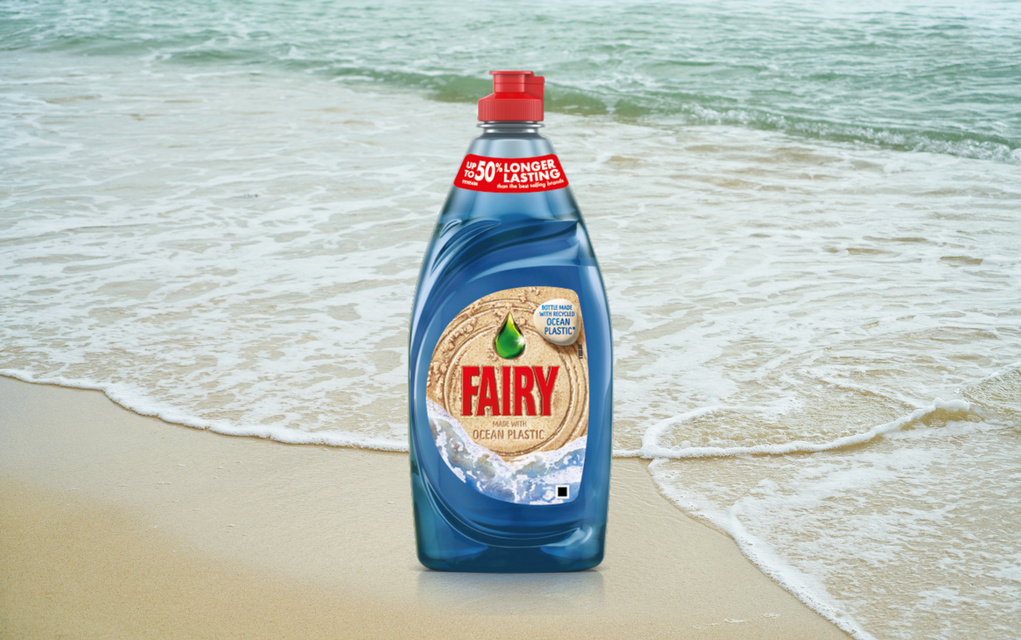
Plastic pollution in our oceans is something most families think about at some point — whether it’s spotting litter on a beach walk or talking to kids about why recycling matters. A few years ago, one household name took a very visible step to put the issue front and centre: P&G, the makers of Fairy, produced a limited run of washing-up liquid bottles made from recycled ocean plastic.
It’s a nice example to share with kids of how everyday products can be part of the solution to ocean plastic — and a good excuse to talk about recycling at home.
How the bottles were made
P&G partnered with recycling specialist TerraCycle to produce 320,000 Fairy Ocean Plastic bottles — at the time, the largest production run of recyclable dish soap bottles in the world to use ocean plastic.
Each bottle was made from a mix of materials: 10% ocean plastic, collected from beaches and coastlines, and 90% post-consumer recycled plastic. Just as importantly, the bottles themselves were also recyclable, meaning the plastic could keep being reused rather than ending up as waste again.

The ocean plastic used came from beach clean-ups around the UK, where volunteers collected washed-up plastic waste. That plastic was then ground down into pellets before being sent to P&G, where it was processed into the material used for the new Fairy bottles.
Why it matters
Initiatives like this one are a useful reminder that big companies can play a real part in tackling ocean plastic pollution — and that consumer products don’t have to rely on brand-new plastic. Seeing a recognisable household bottle made partly from beach litter is also a great, concrete way to talk to kids about where plastic waste ends up, and why recycling and beach clean-ups matter.
It’s part of a wider shift many parents will have noticed on supermarket shelves in recent years, with more brands moving towards recycled and recyclable packaging.
Talking to your kids about ocean plastic
If this is a topic your children are curious about, a few simple starting points can help:
- Point out recycling symbols and recycled content on packaging next time you’re doing the shop together.
- Talk about what happens to plastic that ends up in rivers, on beaches, or in the sea.
- If you live near the coast, a family beach clean-up is a hands-on way to make the issue real for younger kids.
FAQs
What were Fairy Ocean Plastic bottles made from?
They were made from a combination of 10% ocean plastic, collected from beaches and coastlines, and 90% post-consumer recycled plastic.
Who made the Fairy Ocean Plastic bottles?
They were produced by P&G in partnership with recycling company TerraCycle.
How many bottles were made?
It was a limited production run of 320,000 bottles.
Are the bottles still available in shops?
This was a limited-edition run, so availability will vary and may no longer be current — check with retailers or P&G directly for up-to-date stock information.
Keep exploring with MyKidsTime
If you enjoyed reading about this initiative, you might also like our piece on recycled and recyclable beauty packaging, or browse our family life section for more ideas on raising eco-aware kids.
Save this article so you can find it again next time you’re chatting to the kids about recycling and ocean plastic.
Don’t miss out
Want more family-friendly ideas, competitions and offers like this delivered straight to your inbox? Sign up for the free MyKidsTime newsletter — it only takes a minute, and you can unsubscribe any time.