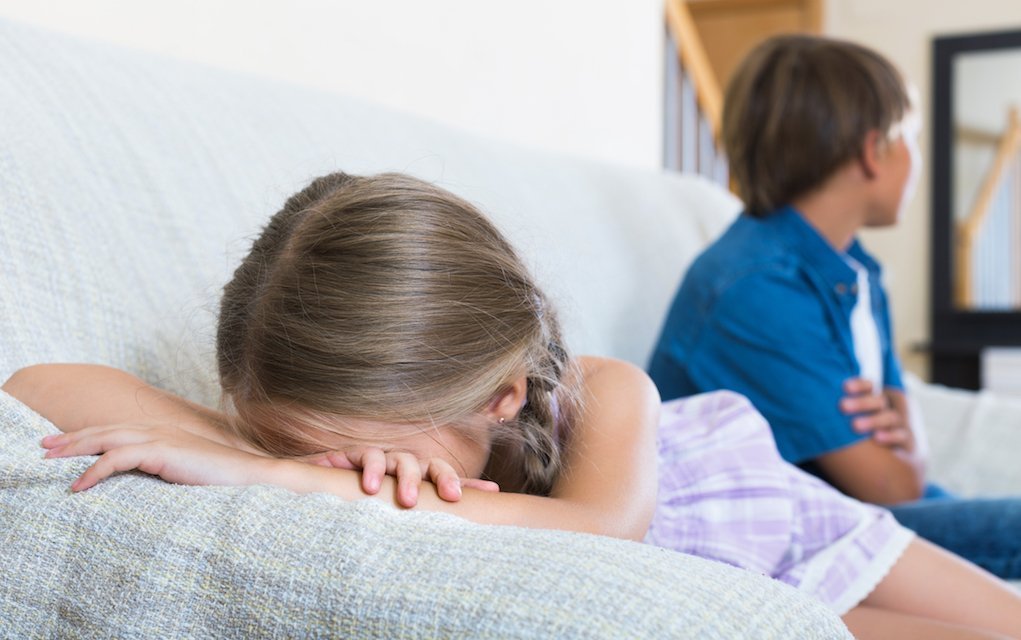
Sibling rivalry and fighting is something almost every parent can relate to, if you have two or more children. The bickering, the squabbling, or even the physical scraps, can wear you down. This isn’t how you dreamed your family would be. Where’s the happy family you imagined?
The bickering between my two sons, which was starting to turn into punches, was driving me mad. I turned round and drew an imaginary line down the centre of the back seat of the car.
“Now that’s your side and that’s your side. You each stay on your side of the car!” I instructed.
It wasn’t two minutes later when the younger one piped up, “Mum, his finger’s on my side.”
The ongoing squabble and ridiculousness of it can sometimes make you feel like laughing, but more often it just wears a parent down. You can feel so frustrated when your children fight that you feel like crying — or yelling.
If sibling rivalry is an issue in your home and your kids keep being mean to each other, here are 7 useful tips to help you flip the negativity into a more positive outcome.

7 Useful Tips – What To Do When Your Kids Fight Continually
TIP #1 Remember, “This too will pass”
The “finger on my side of the car” incident is from my own children’s growing years. Now it brings a smile to my face. They’re adults now and have an easy relationship with each other. Even when they were little, although they could be mean to each other, I knew they’d stick up for one another if anyone else tried to hurt them. When you feel yourself getting wound up, step back and ask yourself:
“Will this be a big deal five hours from now / five weeks from now / twenty years from now?”
(Having said that, unchecked mean behaviour can cause long-lasting emotional scars, so please read on.)
TIP #2 Choose to Stay Calm

Sometimes we get so uptight about the fighting that our own stress adds to the tension of the moment. Choose to be calm. It’s easy to end up grumbling, nagging or yelling, but that only adds fuel to the fire. When you remain calm, you restore calm — the strongest emotion in the room usually wins. If you’d like a simple reminder to help you avoid the yelling (or nagging, or scolding) trap, you can download a free “Stop the Yelling” fridge poster.
TIP #3 Remember your children’s behaviour is about them, your response is about you
It’s easy to let yourself think that if you were a “better parent” this wouldn’t be happening. Sibling rivalry is normal — it’s what we do with it that counts. Keep in mind that their behaviour is about them, not about your parenting, and it will be easier to stay calm.
TIP #4 Calm everyone down before sorting out the issue

When your children are in the middle of a fight, they’ve gone into fight, flight or freeze mode, which means the thinking, reasoning part of the brain is temporarily offline. You won’t be able to get any sense out of them, or help them see any sense, while they’re upset. If a row is already underway, separate them and return to the topic only once everyone is calm and able to think clearly.
TIP #5 Don’t Play Referee – Be Coach
Once they’re calm enough to interact, rather than asking who started it — which only leads to blaming and excuse-making — use “what” questions to focus them on creating win-win solutions:
- So what do you want to see happen?
- And what do you think your brother or sister needs to happen?
- And what else needs to happen?
- And what’s the next step you can take now?
TIP #6 See the Positive in Kids Fighting
In childhood, our siblings are often our most useful “tool” for learning how to navigate boundaries and negotiate solutions. Rather than thinking, “Oh no, they’re being mean to each other again,” try asking yourself, “How can I help them turn this into a meaningful lesson for life?”
For more ideas on how to help your children interact more happily, you might like to read our related post, “How to Stop the Kids Fighting”.
TIP #7 Fill Their Love Tanks

Kids often act mean when they’re feeling demeaned. Rather than shaming or blaming them for “bad” behaviour, make it clear what you DO expect from them instead.
Look at the bigger picture of your family life and create opportunities for getting out into nature, having fun together, and helping each child feel uniquely loved. “Feel good” activities help the body release the chemicals that calm us down, easing the stress response that makes us all more reactive. So for less stress and reactivity in the home, the best tonic for everyone is more fun and more loving connection.
So What’s the Bottom Line?
You may also want to read our earlier post, “Sibling Rivalry – What To Do When Your Kids Are Being Mean To Each Other”.
When your kids seem to fight continually, remind yourself it is genuinely normal. Research into sibling relationships shows that children between around 3 and 7 years old clash surprisingly often over the course of a day. So try not to get uptight and sweat the small stuff.
Your key focus is Tip #2 — stay calm — because once you’re calm, you’ll be able to figure out what’s really needed, and support your children to learn more helpful ways of interacting. You’re on the path to raising emotionally intelligent young people.
A parent coach can offer support and help you build the insights and relationship skills to help your children learn to interact respectfully and fight fairly.
We’d love to hear your experiences of what you do when your kids keep being mean to each other. Post your question or comment below.

Frequently Asked Questions
Is sibling rivalry normal?
Yes. Almost every family with more than one child experiences some level of bickering, squabbling or competition between siblings. It’s a normal part of children learning to share space, attention and belongings.
At what age do siblings fight the most?
Younger children, roughly between ages 3 and 7, tend to clash more frequently, often over small, everyday things like toys, turns or perceived unfairness. Fighting usually becomes less frequent as children get older, though the type of conflict can change.
How can I get my kids to stop fighting all the time?
You can’t eliminate sibling conflict completely, but you can reduce how intense and frequent it is. Staying calm yourself, separating children until everyone has settled, then helping them find their own solutions (rather than deciding who’s “right”) all help children learn better ways to handle disagreements over time.
Should I punish both children when they fight?
Rather than focusing on blame or punishment, it’s usually more helpful to wait until everyone is calm, then guide both children through what they each need and what should happen next. This helps them build the skills to solve problems themselves, rather than just waiting to be told off.
When should I be concerned about sibling rivalry?
Occasional squabbling and even some physical scuffles are common and not usually a cause for worry. If fighting is frequent, one child seems consistently fearful of the other, or conflict is causing ongoing emotional distress, it’s worth talking to a professional such as a parent coach, GP or child psychologist for extra support.
Related Articles
- How to Stop the Kids Fighting
- Sibling Rivalry – What To Do When Your Kids Are Being Mean To Each Other
- Positive Discipline Tips Every Parent Should Know
Save These Tips for Later
Sibling squabbles have a way of popping up again just when you thought you’d cracked it. Bookmark this article or save it to your parenting folder so you can come back to these 7 tips the next time the bickering starts up in the back seat.
Want More Family Life Ideas Like This?
Sign up for our free newsletter, packed with practical parenting ideas, family activities and offers — straight to your inbox each week, completely free.