
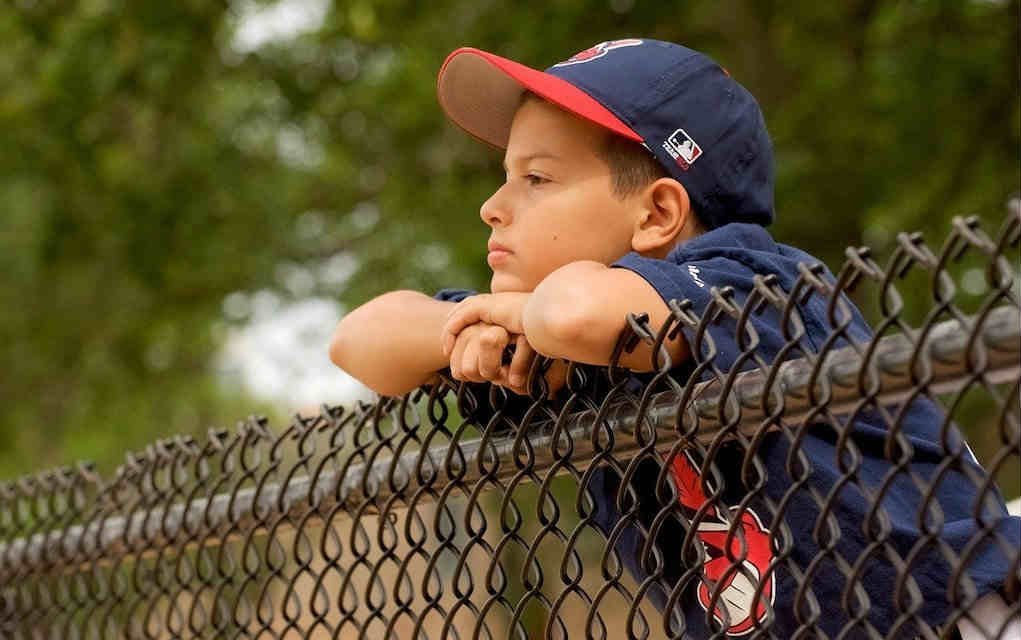
Does your child ever struggle with feelings of failure? Whether it’s exams, sport, or even a family board game, kids can take setbacks hard and feel like they don’t measure up. These practical tips to help your child deal with failure come from P.R. Smith, Irish author and founder of The Great Sportsmanship Programme, and show how ‘failing’ can actually be a springboard to something better.
Don’t miss our best content straight to your inbox! Sign up now for our free newsletter, packed with fun things to do with the kids, family-friendly recipes, expert advice, parenting tips and great competitions.
In today’s competitive world, the pressure to do well — at work, in sport, at school, and socially — starts young. It’s a lot to carry, and it can be especially tough for children who haven’t yet learned how to put a setback in perspective.
The good news is that the ability to cope with pressure and disappointment is something children can learn, and parents play a huge part in teaching it. Our instinct is often to protect our kids from failure altogether — to shield them, smooth the way, and carry the worry on their behalf. But doing this too much can actually hold them back. Learning how to deal with failure is one of the most valuable skills a child can develop, and it becomes a building block for later success.
You May Also Enjoy 10 Things You Do That Might Be Making You A Helicopter Parent
Tips to Help Your Child Deal With Failure
First, it helps to remember that everybody fails — all of us, at different things, at different times in our lives. Even the most successful scholars, sports stars, business people and politicians have failed along the way. By reframing failure as part of growth, you can help your child find their way to a happier, more resilient outlook.
These tips will help you support your child, your teenager — or even yourself — when dealing with failure.
#1. You Can Learn From Failure
Ask: what have you learned? Understanding what went wrong, and thinking through how to do better next time, is where the real value in failure lies.
Take a minute to watch this short video, which describes how failure can become “a platform for self-education” — something you can build from, learn from, and move forward from. Instead of staying negative, the experience becomes transformational.
#2. Look At the Positives
Encourage your child to find the positives in every situation by chatting about the experience together. Maybe they didn’t win the match but scored a goal, or they didn’t get the grade they wanted but did better than last time.
Whatever the outcome, there will usually be smaller wins and learnings along the way — help your child spot them.
#3. It’s OK to Feel Sad
It’s completely normal to feel sad after a loss or setback. It’s also important to acknowledge that feeling, and then move on.
We’ve all heard the phrase “don’t be a sore loser” — and it’s true. Whether in sport or elsewhere, taking a defeat with good grace and congratulating the other side is a mark of real character. Win or lose, a handshake afterwards is what the true greats do.
#4. Don’t Blame Others
Try not to blame others or make excuses for a setback. Taking responsibility, owning mistakes, and learning from them is a far more useful habit than looking for someone to blame.
In a team setting, a win or a loss belongs to the whole team. If a teammate misses a chance in the final minute, that’s not their fault alone — just as you’d share in celebrating a win, share in accepting a loss.
#5. Everybody Fails At Some Point
“I have not failed. I’ve just found 10,000 ways that won’t work.” – Thomas Edison, American inventor of the light bulb
It might not feel like it in the moment, but everybody fails at something, sometime. Below, we share some inspiring examples of well-known people who failed — and went on to succeed anyway.
#6. Failure is Usually Not Fatal
Mistakes happen — and life goes on. Helping your child see a setback as a moment, not a verdict on who they are, makes a real difference to how they bounce back.
#7. Real Winners Try Their Best
If your child can honestly say they tried their best, they’re a real winner — regardless of the result.
Remind them of this often, especially before high-pressure moments like tests or sports events. All any of us can do is our best, and that’s genuinely enough.
#8. Believe in Yourself
Who your child is goes far beyond one failure. However big it may feel right now, they can and will go on to bigger and better things.
#9. “It’s Not Whether You Win or Lose…”

This well-known quote from Newbolt sums it up well — how you conduct yourself matters more than the result. You can download a copy here to share with your child as a gentle reminder of what really matters.
#10. Ask For Advice
Failure gives you the chance to try again, or try something new. Just because something didn’t work this time doesn’t mean it’s time to give up.
Remind your child they can always ask you, a teacher, a coach, or someone with more experience for advice — and then really listen to it.
#11. Continue to Challenge Yourself
Success looks different for everyone, so encourage your child to set their own goals and targets. Often, growth means stepping outside a comfort zone. Try to see this as being a risk-taker, not a failure.
#12. Never Stop Trying
Failure can make your child stronger and more resilient, as long as they learn from it and apply that learning next time.
The most important thing to remember — and to remind your child — is that it’s far better to fail while trying than to fail by never trying at all.
You May Also Enjoy 15 Positive Parenting Techniques Every Parent Should Know
10 Inspiring People Who Turned Failure Into Success

Many well-known people from all walks of life have faced failure — and used it to fuel something greater. Sharing a few of these stories with your child might help them feel less alone, and more inspired to keep going.
Walt Disney was fired from a newspaper job for “lacking imagination” and having “no original ideas.” His first company also went bankrupt before he went on to build one of the world’s most recognised brands.
Harry Potter author J.K. Rowling was rejected by 12 major British publishers before her books became one of the biggest publishing successes in history. She once said she wasn’t going to give up until every publisher had turned her down — though she often feared that would happen.
Abraham Lincoln failed twice in business and lost six state and national elections before being elected President of the United States.
Michael Jordan, widely regarded as one of basketball’s greatest players, has said: “I’ve missed more than 9,000 shots in my career. I’ve lost almost 300 games. 26 times I’ve been trusted to take the game-winning shot and missed. I’ve failed over and over and over again in my life, and that is why I succeed.”
Rugby player Mathew Tait won his first international cap at just 18, hailed as “the future of English rugby” — then was dropped after that single game. He picked himself back up, kept going, and went on to win 38 caps.
Albert Einstein didn’t speak until he was four years old, and his teachers reportedly said he’d “never amount to much.” He went on to become one of the most influential scientists in history.
The late George Best was the only player in his squad not selected for the Northern Ireland schoolboy team at 16. He didn’t give up, and went on to become one of the greatest footballers of his generation.
Sir Alex Ferguson didn’t win a trophy in his first four years managing Manchester United. He went on to win 13 league titles, 5 FA Cups, 4 League Cups, a Club World Cup and 2 Champions League titles.
Dr Seuss had his first book, And to Think That I Saw It on Mulberry Street, rejected 28 times. He went on to create beloved classics including The Cat in the Hat, Green Eggs and Ham, The Lorax, and Oh, The Places You’ll Go!
At age 11, Lionel Messi was cut from his team after being diagnosed with a growth hormone deficiency that made him smaller than most kids his age. He went on to become one of football’s greatest ever players.
You May Also Enjoy Kayla Montgomery Collapses After Every Race – But Keeps Running While She Can
Need More Inspiration? Check Out The Great Sportsmanship Programme

The Great Sportsmanship Programme is designed to help kids and teens read more, play more, and respect more. It offers schools and clubs a programme that helps inspire, build literacy, nurture an interest in sport, and increase self-esteem and positive thinking. If you think your school or club would benefit, you can find out more and get in touch here.
Frequently Asked Questions
How can I help my child cope with failure?
Talk openly about the experience, help them spot what went well alongside what didn’t, and remind them that trying their best matters more than the outcome. Modelling how you handle your own setbacks also teaches them a huge amount.
Is it normal for children to struggle with failure?
Yes — it’s completely normal, and very common. Learning to handle disappointment is a skill that develops over time, and children need practice, patience and support from the adults around them to build it.
What should I say to my child after they lose a competition or fail a test?
Acknowledge how they’re feeling first, before jumping to lessons or fixes. Once they feel heard, gently help them look for what went well, what they learned, and what they might try differently next time.
How can sport help teach children resilience?
Sport gives children regular, low-stakes practice at winning and losing, which helps build resilience over time. Team sports in particular teach children to share both credit and setbacks, rather than placing blame on themselves or others.
More Parenting Reads You’ll Love
If this article was useful, you might also like:
- 10 Things You Do That Might Be Making You a Helicopter Parent
- 15 Positive Parenting Techniques Every Parent Should Know
- Kayla Montgomery Collapses After Every Race – But Keeps Running While She Can
Save This for Later
Want to come back to these tips next time your child faces a tricky setback? Bookmark this page, or browse more of our parenting and family life articles for further ideas on building confidence and resilience in your kids.
Get More Ideas Like This
Enjoyed this? Sign up to our free weekly newsletter for more practical parenting tips, family activity ideas, and expert advice delivered straight to your inbox.