
Every parent asks the same question at some point: what can I actually do, day to day, to support my child’s development? The good news is that it doesn’t need to involve expensive toys, classes or screens. Some of the most powerful support comes from simple, everyday moments spent together.
These ten tips are drawn from Barnardos’ Parenting Positively guidance for parents of children aged 6 to 12, and they’re just as useful today as ever. Each one is a small, doable way to help your child grow in confidence, skills and independence.
Understanding how children learn best
Children move through natural stages of development, and they tend to show you when they’re ready for something new. A child who’s ready to read, for example, will start asking what words mean, “pretending” to read, and showing curiosity about books and signs around them.
Trying to push a skill before a child is ready rarely helps — it can knock their confidence instead of building it. On the other hand, if an activity is too difficult, or a child doesn’t get enough support to manage it, they can become discouraged and give up. The sweet spot is offering appropriate challenge, alongside plenty of quiet time to rest, play, and simply be a child.
10 simple ways to support your child’s development
1. Read together often — even once your child can read independently. Shared reading time builds vocabulary, connection and a lifelong love of books.
2. Visit the library regularly and let your child choose books that interest them. Ownership over the choice makes reading feel like fun, not homework.
3. Play cards and board games together. These build thinking skills, patience, turn-taking and social confidence.
4. Get creative together — try woodwork, gardening, sewing, or arts and crafts. Keep some basic art materials handy: paper, crayons, and interesting recycled bits like cardboard boxes and buttons.
5. Make room for physical activity. Outdoor play, team games and general movement all support healthy development.
6. Offer props for imaginative play — puppets, dress-up clothes and simple costumes let children create their own stories and plays.
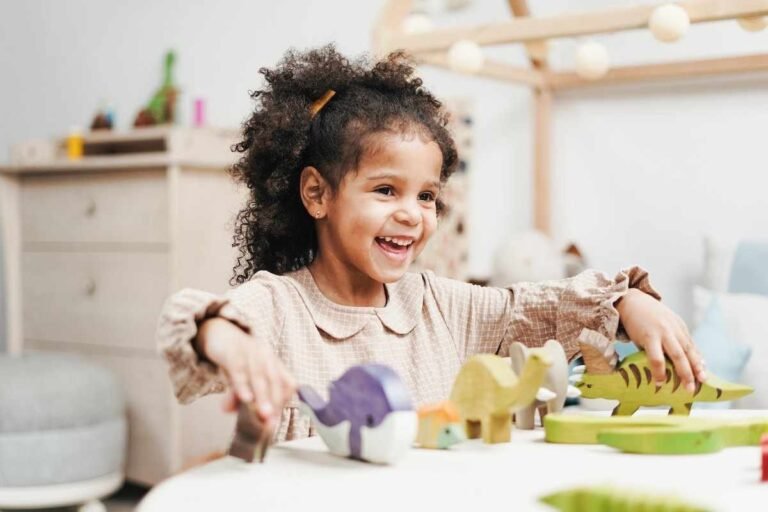
7. Choose traditional toys where you can — skipping ropes, balls, dolls, toy cars and construction sets. These open-ended toys often support development just as well, if not better, than heavily marketed tech toys.
8. Keep an eye on screen time. Balancing it with activities that build social, emotional and physical skills helps development stay well-rounded.
9. Protect time for free play. Unstructured time, where your child sets their own rules and stories, is where a lot of real learning happens.
10. Notice new skills when they appear — not just with words, but with your attention, eye contact and genuine enthusiasm. Children thrive on being noticed.
Why connection matters as much as activity
None of this needs to be complicated. Children need time with their parents — especially relaxed, playful time where they feel calm and connected. If you can manage twenty minutes of focused, one-on-one play after work or school, you’ll likely notice the difference in your child’s mood and confidence.
The goal isn’t to fill every minute with “development.” It’s simply to enjoy being together, often — the rest tends to follow.
Frequently asked questions
What’s the single most important thing I can do to support my child’s development?
There’s no one “must-do” activity — consistency and connection matter more than any single task. Regular, relaxed time together (reading, playing, chatting) supports development more reliably than any one specific activity.
How much screen time is okay?
This article doesn’t set a specific number, as recommendations vary and are best checked against current official guidance. The general principle here is balance: make sure screen time doesn’t crowd out play, physical activity and face-to-face time.
My child doesn’t seem interested in reading. Should I push it?
Gently keep books available and keep reading together yourself, but avoid forcing it. Children usually show interest in their own time — your job is to make books feel like a relaxed, enjoyable part of life, not a task.
Are educational toys better than traditional ones?
Not necessarily. Open-ended, traditional toys — like blocks, balls, dolls and dress-up clothes — often support imagination, problem-solving and social skills just as well as toys marketed as “educational.”
How much daily one-on-one time should I aim for?
Even a short, focused block — around twenty minutes — of undistracted play or conversation each day can make a real difference to how connected and supported your child feels.
You might also enjoy
If you found these tips useful, you’ll probably enjoy 50 Things to Do for Your Children That Cost Nothing But Time — a big list of simple, free ways to spend quality time together. It’s a great follow-on read for parents looking for more easy, everyday ideas.
Don’t miss our free weekly ideas
Want more simple, practical parenting ideas like these delivered straight to your inbox? Sign up for the free MyKidsTime newsletter for weekly activity ideas, offers and competitions — no cost, just useful stuff for busy parents.
Browse more family life ideas
No printable for this one, but if you enjoyed these tips, take a browse through our family life section for more simple, everyday ways to connect with your child — or save this article to come back to next time you need a few fresh ideas.