
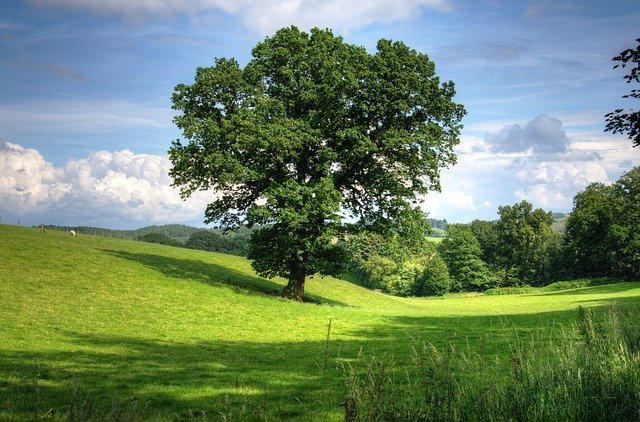
If you come across a tree that’s already been cut down, working out its age is easy — just count the rings. One ring for every year. But what about the trees still standing tall in your local park or back garden? You don’t need to cut one down to find out how old it is. Here’s how to tell the age of a tree without using tree rings.
All you need is a bit of string, a tape measure and a sense of curiosity. It’s a brilliant outdoor activity for kids that mixes maths, nature and a little bit of detective work — and it works just as well in the back garden as it does on a woodland walk.
You will need
- Some string
- Measuring tape and/or string
- Notebook and pen
Instructions
1. First measure 1.5m (5ft) up from the ground of your chosen tree.
2. At this point, pass a piece of string or flexible measuring tape around the trunk of the tree to measure the girth of the tree.
3. If using string, record the length of the string.
4. Every 2.5cm is equal to roughly one year of growth. So if your girth measurement is 250cm, the tree is approximately 100 years old.
This is a handy rule of thumb rather than an exact science — different tree species grow at different rates, and factors like soil, weather and competition from nearby trees can all speed up or slow down growth. But it’s a great way to get a rough estimate and start a conversation about how trees grow.
Why not try it out on a few different trees near you and compare your results? You might be surprised at how old some of the trees in your neighbourhood really are.
You might also like: Measure a Tree and 15 Fun Nature Activities for Kids
Did you work out the ages of any trees near you? Tell us how you got on in the comments below — we’d love to hear which was the oldest tree you found!
FAQs
Do I need any special equipment to measure a tree’s age?
No — just a piece of string or a soft measuring tape, plus a notebook to jot down your measurements. It’s a low-cost activity you can do with things you already have at home.
Does this method work on every type of tree?
It gives a rough estimate for most common trees, but growth rates vary between species and depend on conditions like soil quality, weather and how much light and space the tree has had. Think of it as a fun estimate rather than an exact figure.
What age group is this activity suitable for?
It works well for most primary school–aged children, especially with an adult helping with the measuring and the maths. Younger children can help hold the string while an adult reads the tape measure.
Can I do this activity in my own garden?
Yes — any tree with a reasonably straight, accessible trunk works well, whether it’s in your garden, a local park or on a family walk.
Related Articles
- Measure a Tree
- 15 Fun Nature Activities for Kids
- Fun Outdoor Learning Activities for Kids
Before You Go
Loved this activity? Browse more hands-on nature ideas and outdoor activities on MyKidsTime to keep the whole family exploring, learning and having fun outside.
Enjoyed this? Sign up for our free newsletter for weekly ideas, activities and inspiration straight to your inbox, and find us on Facebook, Twitter, Instagram and Pinterest.