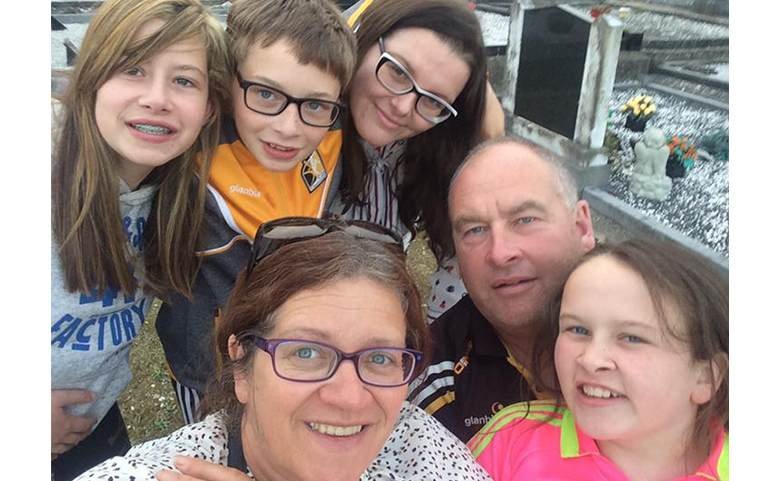
When Patricia Purcell held her baby girl for the first time, everything seemed perfect. However, unbeknownst to her and her husband, Les, their little girl was born with congenital heart disease. Caitriona was merely a few days old when the doctor’s diagnosis began a long journey for the family. Caitriona has three other siblings, Cathal, Rebecca and Edel.
Patricia details her heartbreak at watching Caitriona struggle, her fear of letting her small child go into the hands of surgeons, and her amazement at seeing her little girl flourish into a beautiful teen.
The mum-of-four explains how Heart Children Ireland (HCI) was a “lifeline” for the family, and how she spends her time giving back to the organisation through raising much-needed funds.
After countless appointments, surgeries and hospital visits, Caitriona thrives despite the impact her condition has on her life. This is Patricia and Caitriona’s incredible story.
One Mother’s Story of Dealing with a Congenital Heart Disease Diagnosis
We welcomed our little girl Caitriona into the world on December 14th, 2006. She arrived four weeks early, weighing 2.4kg. We were very excited to be adding to our family, and all seemed perfect. The staff of St Luke’s Hospital, Kilkenny, decided a night for Caitriona in the Special Care Unit was advisable due to her early arrival and size. What was one night without her beside me?
Unknown to us, the nurse had noticed Caitriona was a little blue as she lay under the light in her crib. They called the paediatrician to check her out, and within half an hour our world came crumbling down around us. We were taken to the SCU and told that Caitriona had a significant heart murmur and needed to be transferred to Our Lady’s Children’s Hospital, Crumlin.
The priest was called to pray with us, our baby was hooked up to machines and placed in an incubator. Sirens rang out as the ambulance left Kilkenny for Crumlin. My husband and I travelled behind, holding photographs the nurses had given us. Hardly a word was spoken on the journey — both of us thinking the worst and saying nothing.
The Diagnosis
The next day, we were introduced to a team of doctors and nurses who were to become our dear friends and confidants for the coming years. Following many tests, our cardiologist, Dr David Coleman, explained to us that Caitriona had a complex heart disease and would require open-heart surgery.
Caitriona was diagnosed with Transposition of the Great Arteries. The two main arteries going out of her heart, the pulmonary and the aorta, are switched in position. She had a large VSD, a large hole in the lower chambers of her heart, and a PDA, an unclosed hole in the aorta. The newborn also had a heart valve disorder called Pulmonary Stenosis (a narrowing or blockage of the pulmonary valve). Mitral valve regurgitation was also detected, which means her valve was letting blood leak backwards into the heart. The diagnosis began our journey down the road as parents of a child with congenital heart disease (CHD).
Having a child born with congenital heart disease is a devastating blow to any family. It’s the unknown of what lies ahead for your child, or your family, which is the most frightening feeling imaginable. It was a waiting game as we watched our little girl struggle daily. Caitriona remained stable, and Crumlin allowed us home for Christmas. Instead of being delighted, we were terrified. We would watch her as she slept, too afraid to sleep ourselves in case anything happened to her.
I Just Wanted To Pick Her Up and Run
Two days into 2007, we ended up back in Crumlin — Caitriona was deteriorating, her oxygen levels were in the low 40s. She was almost in heart failure; she was in trouble. For two nights, I sat in a chair cradling her, surrounded by pillows, holding an oxygen mask over her tiny face.
Caitriona underwent her first procedure two days later, a balloon septostomy. She had a balloon pulled through the upper chambers of her heart to allow a greater amount of oxygenated blood to reach her body. Handing over our little girl was the most gut-wrenching feeling imaginable. She was tiny, and her weight had dropped below 2kg. The anaesthetic was going to be tough, never mind the procedure. I just wanted to pick her up and run, but this wasn’t an option. Thankfully, she did well in the wonderful hands of Dr Paul Oslizlok.
Open-heart surgery was our next step. We were terrified when we met with our surgeon, Professor Mark Redmond. After explaining everything to us, we handed Caitriona over for the BT Shunt surgery. Nerve-wracking is the only way to describe holding your child down so they can put her to sleep. Caitriona was in good health going into surgery, so we were optimistic she would be fine in a few days. Thankfully, she fought and won, and returned to the ward after six weeks.
We moved to St Luke’s Hospital in Kilkenny because her condition was improving. The stay was meant to only be a day or two, but it turned into six weeks after she contracted pneumonia. There were days in hospital when I really didn’t know if we would ever take her home, but she never ceased to amaze us with how hard she fought.
She Was Now a Little Person With a Big Personality

Eventually, we got home. It was a new life of constant trips to Crumlin, with monthly visits as we awaited the next step. Caitriona was admitted for cardiac catheterisation in March 2008. It was getting harder to leave her into theatre, as she was now a little person with a big personality. Caitriona had another surgery that summer called the Bi-directional Glenn. It was an agonising wait, but thankfully things went smoothly, and we were home within 10 days.
Caitriona continued to thrive, with numerous trips to the cath-lab. Over the coming months and years, we spent a lot of time in Crumlin. Caitriona had her third open-heart surgery in the summer of 2011. At five years of age, it was even harder handing her over — she was more aware of what was going on, and she was scared. The surgery went really well, and she spent eight days in ICU. The surgery meant only half of Caitriona’s heart was being used; the other side is a tube, and the long-term prognosis is a possible heart transplant. We spent three weeks in hospital following the operation, but she did well, and things were finally looking up.
We Are So Grateful For Every Day We Spend With Caitriona
We had hoped Caitriona wouldn’t need another open-heart surgery. Unfortunately, because of her mitral valve, we are heading down that road again. It’s a waiting game, but in the meantime she continues to live a normal life, going to mainstream school and doing very well. She is a bright child and tends to know her own limits and how she is feeling. She tires easily and may develop mild blueness of her lips with activity. Her condition has impacted her life and what she can do, but she never complains. As we watch our daughter grow into this beautiful young lady, we are filled with gratitude to the medical team who look after her.
We would appeal to everyone to think about donating blood. Every time Caitriona, or any child, goes into the cath-lab or to theatre, their blood is cross-matched. A supply of blood has to be on hand, along with other blood products including platelets, plasma albumin and other factors.
Years on, after three open-heart surgeries and numerous procedures, we are so grateful for every day we spend with Caitriona. Unfortunately, her heart cannot be repaired. She will require further surgeries and catheterisations. We hope Caitriona can and will live a long and happy life with the help of the medical team. She will be on life-saving medication for life, but this is a small price to pay for someone so precious.
How Heart Children Ireland Support The Family
We are huge supporters of Heart Children Ireland, and when we first heard of this charity all those years ago, it was a lifeline for us. I volunteer with HCI, raising much-needed funds and representing the charity on relevant committees. To raise almost €14k, I went as far as completely shaving my head! I would encourage everyone to consider a donation to HCI.

HCI are a body of support for those living with congenital heart disease, with the mission to help them lead fuller lives. They have a number of services available for individuals and their families. You can support people with heart defects and HCI by taking part in one of their seasonal fundraising challenges, or by making a donation. Alternatively, you can get involved by holding a fundraiser for the charity, or by volunteering when needed.
You can learn more about HCI and the incredible work they do by visiting their website.
Frequently Asked Questions
What is congenital heart disease?
Congenital heart disease (CHD) refers to a range of heart conditions a baby is born with, affecting the heart’s structure. It can include issues with the heart’s valves, chambers or the arteries that carry blood to and from the heart. Some cases are mild, while others, like Caitriona’s, require multiple surgeries and lifelong care.
How is congenital heart disease usually diagnosed?
Some cases are picked up during pregnancy scans, but others, like Caitriona’s, aren’t detected until after birth, sometimes through simple signs such as a baby appearing blue or a doctor noticing a heart murmur during a routine check.
What support is available for families of children with heart conditions?
In Ireland, organisations such as Heart Children Ireland offer information, peer support and fundraising community for families navigating a CHD diagnosis. Families are encouraged to reach out to their hospital’s cardiology team and to support groups for practical and emotional support.
Can children with congenital heart disease live full lives?
Many children with CHD go on to live active lives, attend mainstream school, and take part in everyday activities, though some may need to manage their energy levels and attend ongoing medical check-ups, as Caitriona does.
Related Articles
- How Heart Children Ireland Helps Those With Heart Defects Live a Fuller Life
- Real Parenting Stories: Families Share Their Toughest Moments
- Coping as a Family When a Child Has a Long-Term Illness
Save This Story
If Patricia and Caitriona’s story has moved you, consider saving this article to share with someone who might need it, or browse more real family stories on MyKidsTime for encouragement and support.
Get Weekly Ideas From MyKidsTime
Want more real stories, parenting tips and family ideas delivered straight to your inbox? Sign up for the MyKidsTime newsletter for a weekly dose of useful, heartfelt content for busy parents.