Jigsaw puzzles are one of the best activities you can put in front of a child. They’re fun, engaging, and quietly brilliant for learning — all while feeling like nothing more than playtime.
Even a simple puzzle takes a bit of skill and determination to finish, and the sense of achievement once the last piece clicks into place is a real win for a child of any age.
From coordination to concentration and problem-solving, here’s how jigsaw puzzles can benefit your child’s development.
YOU MAY ALSO ENJOY: 15 Completely Different Board Games to Play with the Family
Choosing the Right Puzzle for Your Child’s Age
Puzzles come in all sizes and difficulty levels, and picking one that suits your child’s age and ability really matters. A puzzle that’s too tricky can lead to frustration rather than fun. Start with simple, chunky pieces for younger children and work up to smaller, more complex puzzles as their skills grow.
Here are some of the ways jigsaw puzzles help your child’s development.
[[IMG:1]]
Hand-Eye Coordination
Everyday tasks rely on the body’s ability to coordinate — the eyes taking in information, the brain processing it, and the hands carrying out the action. Jigsaw puzzles give children early, low-pressure practice at exactly this.
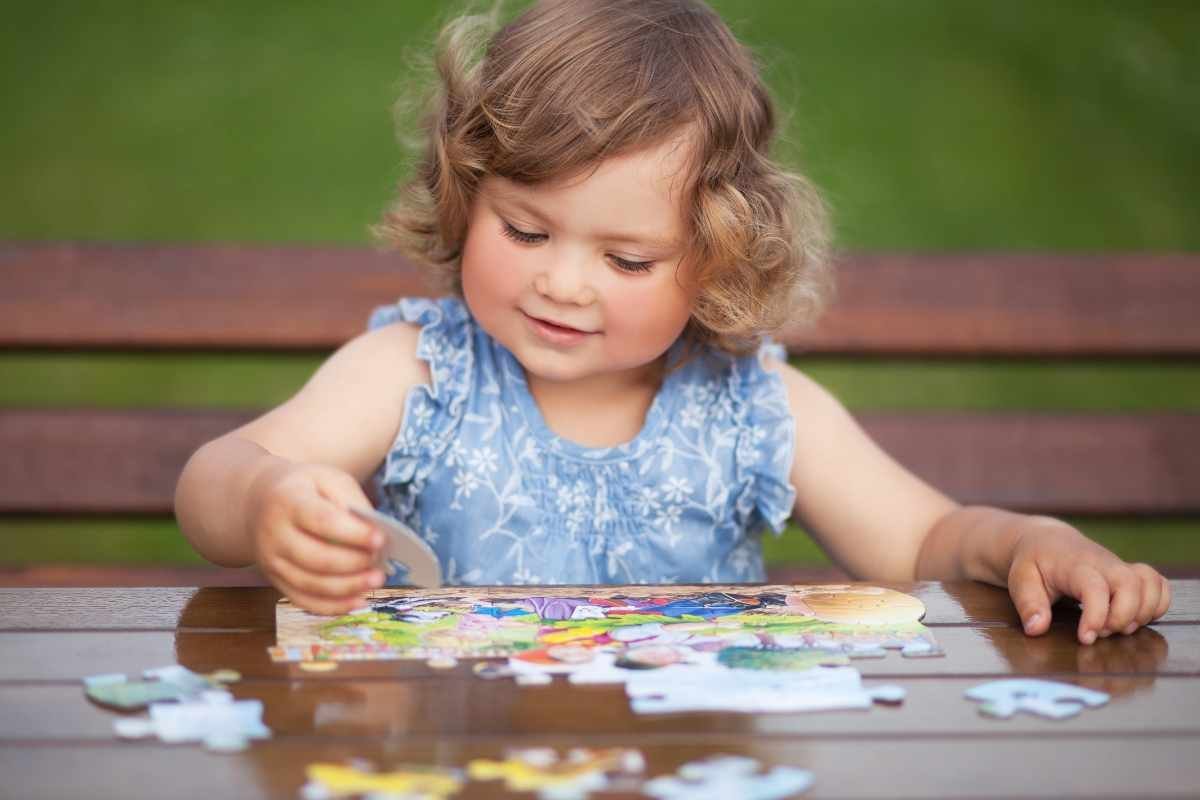
As your child looks at a piece, works out where it might go, and then moves their hand to fit it, they’re strengthening the connection between eyes, brain and hands. They’re also learning to picture what the finished result should look like, so all three are working towards the same goal.
Improved Concentration and Patience
Matching pieces to where they belong takes focus. It also takes time and patience — qualities that don’t always come naturally to young children but that puzzles help build, piece by piece.
Completing a puzzle isn’t always instant, and that’s part of the value. Gently remind your child that it’s meant to take a bit of effort, and that persistence is what gets them there. Choosing puzzle themes your child genuinely loves — favourite characters, animals or scenes — can make the patience-building feel a lot more fun.
[[IMG:2]]
Memory and Cognitive Skills
Puzzles ask children to reason, deduce and think flexibly as they work out how pieces fit together. Remembering what the finished picture looks like, and recalling shapes and patterns as they search for the right piece, all helps build memory skills.
Encouraging your child to keep going also supports abstract thinking — spotting a gap and working out what size and shape would fill it. For children with additional needs, puzzles can also be a gentle, enjoyable way to support cognitive and speech development.
Fine Motor Skills
Picking up, turning and placing puzzle pieces builds strength in little fingers and hands. Those same muscles come in handy later for holding pencils, crayons and other tools children use every day at nursery or school. Puzzles make practising fine motor skills feel like play rather than a chore, while encouraging your child to work independently.
Shape Recognition
Learning to recognise shapes is a key part of early development, and puzzles are a natural way to practise it. Working out which shape fits which gap keeps children engaged and gives their brains a satisfying little workout every time a piece slots into place.
[[IMG:3]]
Problem-Solving Skills
Solving a puzzle takes patience and a bit of creativity. There’s no shortcut — if a piece doesn’t fit, it simply doesn’t fit, and your child has to try again. That process of testing, turning and retrying a piece until it works is problem-solving in action, and it’s a skill that carries well beyond the puzzle table.
Social Skills
Puzzles are a great group activity. Working on one together gives children a chance to connect, take turns, and help each other out. As each child brings their own approach to finding a piece, they practise listening, sharing ideas and working as a team.
Puzzling together through the tricky bits — and celebrating together when it’s done — is also a lovely, low-key way for children to bond and build relationships.
Enhanced Self-Esteem
Finishing a puzzle gives children a real, tangible sense of achievement. That boost to their confidence encourages them to take on bigger challenges next time, and to keep trying even when the first attempt doesn’t go to plan. It’s a small but powerful way to show your child that effort pays off.
Jigsaw puzzles are simple, screen-free fun — and a brilliant way to help your child build skills that will serve them well for years to come.
YOU MAY ALSO ENJOY: Why Imaginative Play for Children is So Important
[[IMG:4]]
Frequently Asked Questions
What age should my child start doing jigsaw puzzles?
Many children can start with simple, chunky puzzles of just a few large pieces from around age two, gradually moving on to smaller pieces and more complex images as their skills develop.
How do jigsaw puzzles help child development?
Jigsaw puzzles support hand-eye coordination, fine motor skills, memory, problem-solving, patience, shape recognition and social skills — all through play.
Are jigsaw puzzles good for children with additional needs?
Yes, puzzles can be a helpful, enjoyable tool for supporting cognitive and speech development in children with additional needs, though it’s worth choosing pieces and complexity suited to your child.
How can I keep my child motivated when a puzzle feels too hard?
Choose an age-appropriate puzzle, encourage short breaks rather than giving up, and remind your child that puzzles are meant to take a bit of effort. Celebrating small progress along the way helps keep motivation up.
You Might Also Like
- 15 Completely Different Board Games to Play with the Family
- Why Imaginative Play for Children is So Important
- Fun and Easy Craft Ideas for Rainy Days
Want More Ideas Like This?
If you enjoyed this, browse our family activities section for more simple, screen-free ways to keep little hands and minds busy.
Never Miss an Idea
Want more activity ideas, learning tips and family inspiration delivered straight to your inbox? Sign up for the MyKidsTime newsletter for a weekly dose of ideas to try with your kids.