
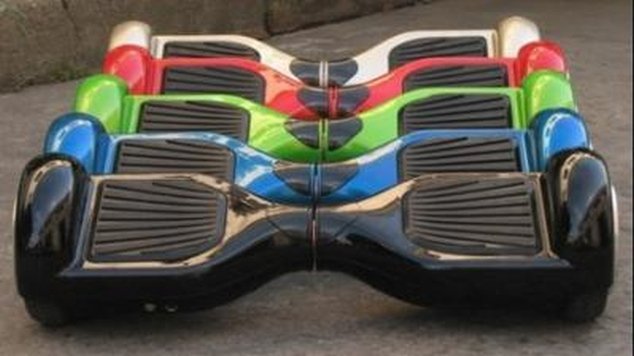
Hoverboards, balance scooters, self-balancing wheels — whatever your child calls them, these gadgets are a perennial favourite on wish lists. But before you buy one, it’s worth knowing that not every hoverboard on the market is safe.
The main safety issues with hoverboards centre on unsafe plugs and fuses, and faults in the cables, chargers and battery packs. If the charger or battery pack overheats, it can cause a fire. That’s why it’s so important to buy only from a source you trust, and to check for the signs of a genuine, properly tested product.
Here’s advice from the Competition and Consumer Protection Commission (CCPC) on how to make sure your new hoverboard is genuine and safe — whether you’re about to buy one or you already have one at home.
Hoverboards are also sometimes called Balance Scooters, Self-Balancing Scooters, Balance Wheels, Airboards or Oxboards.
If you’re thinking of buying a hoverboard
#1. Look for proof that it meets required safety standards
Given the potential dangers, don’t buy one of these devices without proof that it meets the required safety standards.
#2. Always check for a CE mark
 Look for a CE mark, but don’t rely on it alone — the mark itself can be faked. It should be clearly visible and easy to read. A genuine CE mark indicates that the product meets Irish and European safety standards.
#3. Check for traceable manufacturer or importer information
Check the box, the charger and the device itself for markings or traceable information, such as the name and contact details of the manufacturer and/or importer. If this information is missing, don’t buy the item.
Recommended Reading: Tips for buying Balance Scooters and Hoverboards this Christmas
#4. Take a look at the manual provided
Check the manual that comes with the product for spelling mistakes or instructions that don’t make sense. Poor-quality manuals are often a sign of a poor-quality product.
#5. If buying online, look for signs that the website or seller is genuine
If you’re buying a board online or through social media, check for online reviews that seem genuine, and look for details of the company’s head office and landline number. Spelling mistakes in the product listing, or an absence of any positive reviews, can be a warning sign that this isn’t a professional operation.
#6. Be wary of buying from someone you don’t know
Be cautious about buying these products from an individual seller on social media or a website. You could end up with something unsafe from an unscrupulous trader — or an unsuspecting private seller who doesn’t know the product is faulty either. Remember, too, that if you buy from another consumer or private seller, your usual consumer rights don’t apply.
#7. If you’re not satisfied, don’t buy
If you’re not fully confident the product you’re buying is safe, don’t spend your money on it.
If you’ve already bought a hoverboard
If you’re unsure whether your hoverboard meets safety standards, here’s what the CCPC advises.
Hoverboard bought from a shop
 Bring it back to the retailer and ask for written proof that the product meets the required safety standards. If this can’t be provided, ask for a refund.
- Because of the risk of fire, never leave a hoverboard charging unattended, especially overnight.

Hoverboard bought online
- If you’ve ordered a hoverboard but haven’t yet received it, you can cancel immediately without giving a reason, in writing (an email is fine).
- If you’ve already received it, you have 14 days from the date of receipt to cancel your contract in writing without giving a reason, and a further 14 days to return the item. You may have to pay the return postage, but you’re entitled to a refund of the cost of the item.
- If the trader didn’t give you information about your right to cancel, you won’t be liable for the return costs.
If you come across a product you think might be unsafe
- In Ireland, you can contact the CCPC’s consumer helpline to report where and by whom the product was being sold.
- In the US, the Consumer Product Safety Commission can be contacted here.
- In the UK, here’s where to report concerns to Trading Standards.
- In Australia, visit the Australian Consumer Protection website.
One final reminder: even if you’ve bought a hoverboard and you’re happy it’s safe, never leave it charging unattended. Better safe than sorry.
The CCPC website has further information on hoverboards, as well as general product safety and toy safety.
Recommended Reading: Toy Safety: A Guide for Parents

Frequently asked questions
What is a CE mark, and why does it matter on a hoverboard?
A CE mark shows that a product meets Irish and European safety standards. It’s an important thing to check for, but it isn’t foolproof on its own — the mark itself can be counterfeited, so it should be used alongside the other checks in this guide, such as traceable manufacturer details and a genuine, professional seller.
Is it safe to buy a hoverboard from a private seller on social media?
It can be risky. If you buy from an individual rather than a registered trader, your normal consumer rights don’t apply, and you have less protection if the product turns out to be faulty or unsafe.
Can I return a hoverboard I bought online if I change my mind?
Yes. If it hasn’t arrived yet, you can cancel in writing straight away. If you’ve received it, you generally have 14 days to cancel and a further 14 days to return it, and you’re entitled to a refund of the item’s cost.
Is it safe to leave a hoverboard charging overnight?
No — this is one of the most important safety points. Faulty chargers or battery packs can overheat and cause a fire, so hoverboards should never be left charging unattended, including overnight.
Related articles
- Tips for Buying Balance Scooters or Hoverboards this Christmas
- Toy Safety: A Guide for Parents
Save this for later
Shopping around for the right gift can take time. Save this article so you have the safety checklist handy when you’re ready to buy, or browse more of our practical parenting guides for other gift-buying tips.
Don’t miss our weekly ideas
Want more practical tips like this delivered straight to your inbox? Sign up for the MyKidsTime newsletter for weekly ideas, offers and parenting advice you can actually use.