
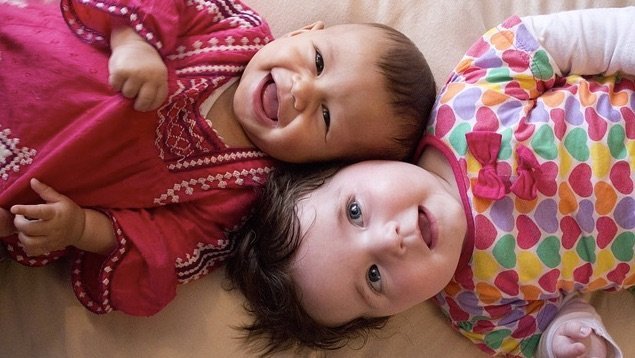
Once you tell the world you’re expecting, the well-meaning advice starts rolling in — from bump-shape predictions to firm opinions on sleep, feeding, teething and everything in between. Some of it holds up. A lot of it doesn’t.
To help you sort fact from fiction, here are 15 popular myths about babies every parent should know.
Sign up for our free newsletter packed with information and great offers. Or join us on Facebook, Twitter, Instagram, Pinterest and YouTube.
#1. Get a Sleep Routine Going from Day 1
 Truth: You’ll be doing well to have a sleep routine sorted by the end of year one — never mind day one.
It’s genuinely hard to influence when a newborn sleeps in the first month. Sleep when they sleep, and try easing in a simple day-and-night routine from around 4 weeks. It takes time, and most babies won’t manage a 6–7 hour stretch until somewhere between 3 and 6 months.
Recommended Reading: Sleep Tips for Kids
#2. Newborns Can’t See
 Truth: They won’t have 20:20 vision, but babies can make out fuzzy shapes from the moment they’re born.
Newborns tend to see mostly in black and white for the first couple of weeks, with colour vision developing from around 14 days old.
Recommended Reading: 10 Positive Parenting Tips Every New Parent Should Know
#3. My Baby Can’t Communicate With Me
Truth: Babies are trying to communicate with us constantly. Just because they don’t have the words yet doesn’t mean they can’t let you know what they want.
Babies can get frustrated when they’re not understood, which is why many parents find simple baby signing methods helpful for bridging the gap before speech develops.
#4. Twins Skip a Generation
 Truth: Identical twins occur randomly — medical evidence doesn’t support them “skipping” generations.
Fraternal twins are a different story: the hyper-ovulation gene that makes them more likely can be passed down from parent to child and can turn up in any generation.
Recommended Reading: What Parenting is REALLY like
#5. Your Body Shape Will Never Be the Same Again
 Truth: If you were in good shape before pregnancy and return to a healthy exercise and eating routine afterwards, your body can bounce back a long way.
Worth remembering too: bodies change with age regardless of pregnancy, so it’s not fair to blame every change on baby!
Recommended Reading: Getting Back in Shape after Having a Baby
#6. Sharing Your Bed Is Best for Baby
 Truth: Some parents swear by co-sleeping, but medical guidance is clear that having a young baby in bed with you raises the risk of both suffocation and SIDS (sudden infant death syndrome).
The safer approach is a crib or cot in your room for the first 6 months or so. Parents who do bed-share often find it a hard habit to unwind later — see how one parent ended up co-sleeping with her 5 year old!
Recommended Reading: How To Break the Habit of Thumb Sucking and Soother
#7. Morning Sickness Only Occurs in the Morning
 Truth: We wish!
Morning sickness can strike any time of day and is often linked to low blood sugar. There’s one myth that actually holds some truth: ginger can help settle it for some people. Certain smells can also be a trigger — plenty of parents will know that feeling well.
#8. Vaccines Can Cause Autism
 Truth: This is one of the most persistent baby myths, but the scientific consensus is clear: there is no credible evidence linking vaccination to an increased risk of autism.
The claim traces back to a now-discredited 1997 study published in The Lancet. Since then, numerous large-scale studies have found no link between vaccines and autism — while declining vaccination rates in some areas have been linked to a rise in preventable illnesses like measles and whooping cough.
Recommended Reading: What Part of Parenting We Would Take a Pass On!
#9. Your Baby Only Understands Baby Talk
 Truth: It’s worth talking to your baby much as you would an older child — using real words and names for things.
Babies are learning constantly, and their brains are remarkably absorbent in the early years.
Recommended Reading: 10 Fun Activities for Babies and Mums
#10. Weaning Your Baby Will Help Them Sleep Longer
 Truth: Health guidance generally recommends waiting until around 6 months to begin weaning. Every baby develops at their own pace, so always chat to your public health nurse or GP about timing for your child.
One myth worth ignoring: adding baby rice to a night-time bottle before 4 months. Younger babies’ kidneys and digestive systems aren’t developed enough to benefit from solid food this early, and it’s unlikely to help sleep.
Recommended Reading: Essential Guide to Baby Weaning
#11. Teething Causes High Fever & Diarrhea
 Truth: Teething is uncomfortable, but in most children it causes only a slight rise in temperature — not a high fever, and research doesn’t support a link to diarrhoea either.
Babies do tend to chew on everything while teething, which can mean picking up more germs than usual. If your child has a genuinely high temperature or diarrhoea that lasts, it’s best to get medical advice rather than assume it’s “just teeth.”
Teething usually brings drooling and some fussiness before a tooth appears, generally starting between 4 and 7 months and continuing until all 20 primary teeth are through. Every child’s timeline is different, so there’s no need to worry if yours is earlier or later than most.
Recommended Reading: Teething and What you Can Expect
#12. Babies Choke on Finger Food
 Truth: Babies are born with a strong gag reflex that helps protect them from choking. It can look alarming the first time you see it, but it’s a normal, protective response that helps them bring up food they can’t yet manage.
That said, every parent should know how to respond if a baby is actually choking. A local paediatric first aid course is well worth the couple of hours for any new parent or parent-to-be.
#13. Babies Need Daily Baths
 Truth: Frequent bathing — even with mild baby soap — can dry out a newborn’s delicate skin.
As long as you’re cleaning your baby thoroughly at each nappy change, a bath every 2 to 3 days is plenty. If a warm bath helps settle your baby before bed, you can still pop them in for a soak and skip the soap most nights.
#14. Babies Poo Once a Day!
 Truth: It’s easy to become fixated on nappy contents, but there’s a wide range of normal. Newborns may go several times a day, while it’s also perfectly normal for a baby — especially one who’s exclusively breastfed — to go every 2 to 4 days.
If you’re concerned about frequency, consistency, or if your baby seems to be in pain, it’s always worth checking in with your GP or public health nurse.
Recommended Reading: 10 Practical Proven Potty Training Tips
#15. Your Child Will Be Spoilt If You Pick Them Up Every Time They Cry
 Truth: You cannot spoil a newborn. Picking them up when they cry reassures them that you’ll respond to their needs, which builds confidence and trust over time.
As babies grow older — from around 6 months or so — it’s fine to let them settle for a few minutes without rushing in every single time, particularly at bedtime. By this stage you’ll usually have a good sense of when your child is genuinely distressed versus simply seeking attention. For a gentler take on this, read I Won’t Always Cry Mummy.
WATCH: The Unique Connection Between Mother & Child
Every child is different, and they all reach milestones at their own pace. Always trust your instincts — and don’t be afraid to seek medical advice whenever you’re worried about your baby. Most of all, try to enjoy the moments; they really do pass quickly, as captured beautifully in The Last Time Poem.

Over to you — have you got any baby myths to add to this list?
Frequently Asked Questions
When do babies usually start sleeping through the night?
Most babies won’t manage a long 6–7 hour stretch until somewhere between 3 and 6 months old. In the very early weeks, it’s normal for sleep to be unpredictable — the best approach is to sleep when your baby sleeps and gently introduce a day/night routine from around 4 weeks.
Can newborn babies actually see?
Yes. Newborns can see fuzzy shapes right from birth, though vision is blurry at first. Babies tend to see mainly in black and white for the first couple of weeks, with colour vision developing from around 14 days.
Is it safe to share a bed with my baby?
Medical guidance advises against bed-sharing with a young baby, as it can increase the risk of suffocation and SIDS. A crib or cot in your room for the first 6 months is the safer option.
Do vaccines cause autism?
No. This myth stems from a discredited 1997 study, and no credible research since has found a link between vaccination and autism. Declining vaccination rates have, however, been linked to a rise in preventable illnesses.
Does teething cause fever and diarrhoea?
Teething can cause mild discomfort and a slight temperature rise, but it isn’t generally linked to high fever or diarrhoea. If your child has either for a prolonged period, it’s best to get medical advice rather than put it down to teething alone.
Will picking up my baby every time they cry spoil them?
No — you cannot spoil a newborn by responding to their cries. Doing so builds trust and security. As babies get a bit older, it’s fine to let them settle briefly before stepping in.
You Might Also Like
- 10 Positive Parenting Tips Every New Parent Should Know
- Getting Back in Shape after Having a Baby
- Teething and What You Can Expect
- The Essential Guide to Baby Weaning
- 10 Practical Proven Potty Training Tips
Save This for Later
Baby myths have a way of resurfacing just when you need clarity most. Bookmark this article or share it with another parent who could use the reassurance — and browse our other parenting guides for more real-talk advice on the early months.
Don’t Miss Our Weekly Ideas
Want more practical parenting tips, family activities and honest advice delivered straight to your inbox? Sign up for the MyKidsTime newsletter — it’s free, it’s weekly, and it’s built for busy parents who don’t have time to go hunting for good ideas.