
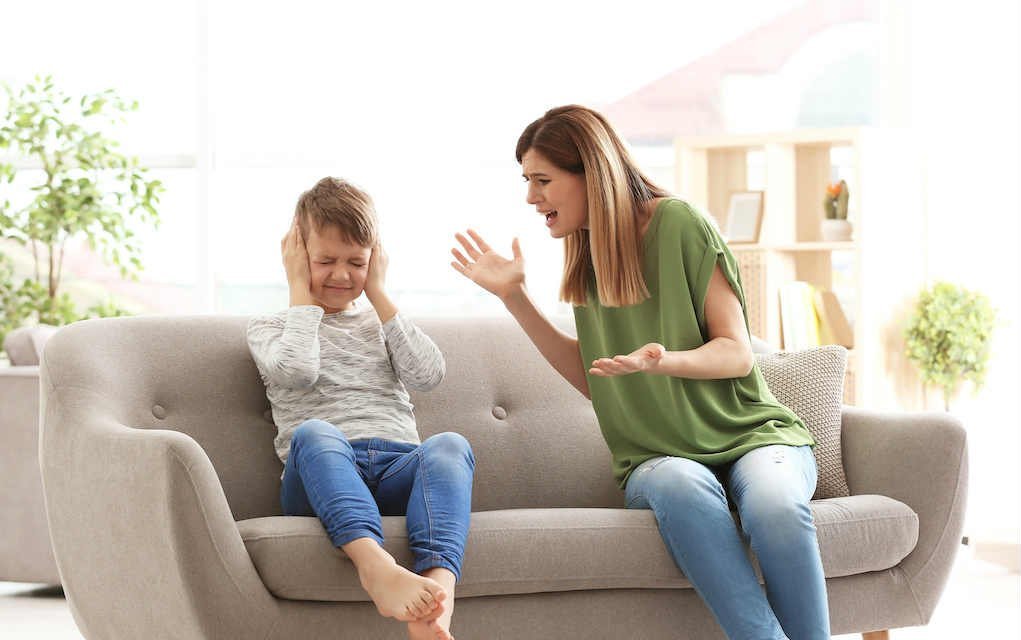
Do you find yourself yelling at your kids to get them to do something, watching things escalate, ending in drama and tears, and then feeling guilty afterwards? You’re not alone. Here’s some honest thinking on why yelling at the kids just doesn’t work — and what to do about it instead.
Have you ever stopped to think about why yelling at your kids isn’t okay? There’s only been one time in my life where I’ve felt glad, even proud, that I yelled.
I was walking to my car from the supermarket in an underground car park when some youngsters sped past in a minibus. Then braked. They’d overshot an empty parking space and started reversing at speed.
I spotted the child, head down, pushing a trolley. He’d be in the direct path of the reversing minibus in a matter of seconds!
“STOP!” I yelled.
Amazingly, the driver heard me above the noise of his engine and slammed on the brakes.
The child froze in his tracks. There were centimetres between the vehicle and the child. That yell stopped a disaster from unfolding.
Yelling is a deeply ingrained human reaction — a signal that alerts us to danger, a way of saying “Watch out!” But somehow, for a lot of us, yelling has become a parenting habit in everyday, non-life-threatening moments too.
That car park is the only time I remember yelling and feeling proud of it. There are plenty of other times I yelled at my kids that I still remember with an uncomfortable twinge, because I’d stepped away from being the parent I actually wanted to be.
I don’t think any of us set out to yell at our kids. But somehow we get wound up by their behaviour, and the frustration comes out as a roar.
You May Also Enjoy: The ONE Essential Thing to Stop Yelling at Kids
6 Reasons Why Yelling At Your Kids Isn’t Okay
1. The more we yell, the more it becomes a habit.
And, like any habit, the more we do it, the harder it is to break.
2. The more we yell, the less children take notice.
When yelling becomes the default, children learn to tune out directions given to them. So, over time, parents who yell are actually likely to see more challenging behaviour, not less.
You May Also Enjoy: How to Parent With Discipline Not Punishment
3. “Yelled at” children are less likely to heed a genuine cry of caution.
If yelling is the everyday background noise, children are more likely to ignore a real “Watch out — you’re in danger!” moment when it matters. As in the car park story above, that difference can matter a great deal.
4. Yelling undermines our children’s sense of self-worth.

Yelling chips away at children’s respect for us — and, just as importantly, their respect for themselves. Self-worth is an essential building block for growing into a happy, capable and compassionate person.
You May Also Enjoy: 7 Useful Tips On How to Build Self Esteem in Your Child
5. The more we yell, the more we weaken the connection with our children.
When we yell, we damage the sense of mutual respect between us, and children often learn to copy the behaviour. Over time this can create real distance between parent and child — a gap that tends to widen as children get older.
6. Children treated disrespectfully are more likely to treat others disrespectfully.
Children raised in homes where love, harmony and mutual respect are the norm generally find it easier to bring those same qualities into their own relationships later in life. How we interact with our children now shapes how they relate to others in the future.
You May Also Enjoy: 10 Simple Ways for Parents to Stop Themselves Yelling
Finding a Way Forward
If this has encouraged you to stop and reflect on why yelling at your kids isn’t okay, a few honest questions might help:
“When I look back on my parenting, will I feel proud of how I interacted with my child?”
“What sort of relationship do I want with my child — now and in years to come?”
“How might my day-to-day interactions shape the person my child becomes?”
If these questions have struck a chord, and you’re serious about building a calmer, more cooperative atmosphere at home, it’s worth exploring resources dedicated to breaking the yelling habit step by step, and looking at how setting clear, kind boundaries can reduce the friction that leads to shouting in the first place.
You May Also Enjoy: 10 Practical Tips on Setting Boundaries For Your Child
Do you find yourself yelling at your kids? What gets in the way of you being the parent you’d love to be? Leave a comment below and let us know — we’d love to hear from you!

Frequently Asked Questions
Is it normal to yell at your kids sometimes?
Most parents lose their temper occasionally — it’s a common part of the parenting journey, not a sign of failure. What matters most is noticing the pattern, understanding why it happens, and working on gentler ways to respond when frustration builds.
Why doesn’t yelling work as a discipline method?
Yelling tends to lose its effectiveness the more it’s used. Children can become used to raised voices and start tuning them out, which often means parents need to yell louder or more often to get the same response — the opposite of what most parents want.
Does yelling actually harm children?
Frequent yelling can affect a child’s self-esteem and their sense of connection with a parent over time. Occasional frustration is human, but a steady pattern of yelling can make children more anxious and less responsive, and can strain the parent-child relationship as they grow.
What can I do instead of yelling?
Small changes help: pausing before reacting, setting clear boundaries in calmer moments, naming your own frustration out loud, and giving yourself permission to step away briefly before responding. Building these habits gradually tends to work better than trying to change everything at once.
Related Reading
- The ONE Essential Thing to Stop Yelling at Kids
- How to Parent With Discipline Not Punishment
- 7 Useful Tips On How to Build Self Esteem in Your Child
- 10 Simple Ways for Parents to Stop Themselves Yelling
- 10 Practical Tips on Setting Boundaries For Your Child
Want More Like This?
If this article struck a chord, you’ll find plenty more real-life parenting ideas, tips and honest advice in our library of family life articles — worth a browse and a bookmark for the next time you need a bit of encouragement.
Get Weekly Ideas Straight to Your Inbox
Sign up for our free newsletter for a regular dose of parenting tips, family activity ideas, competitions and offers — all in one friendly email. It’s free, and you can unsubscribe any time.