
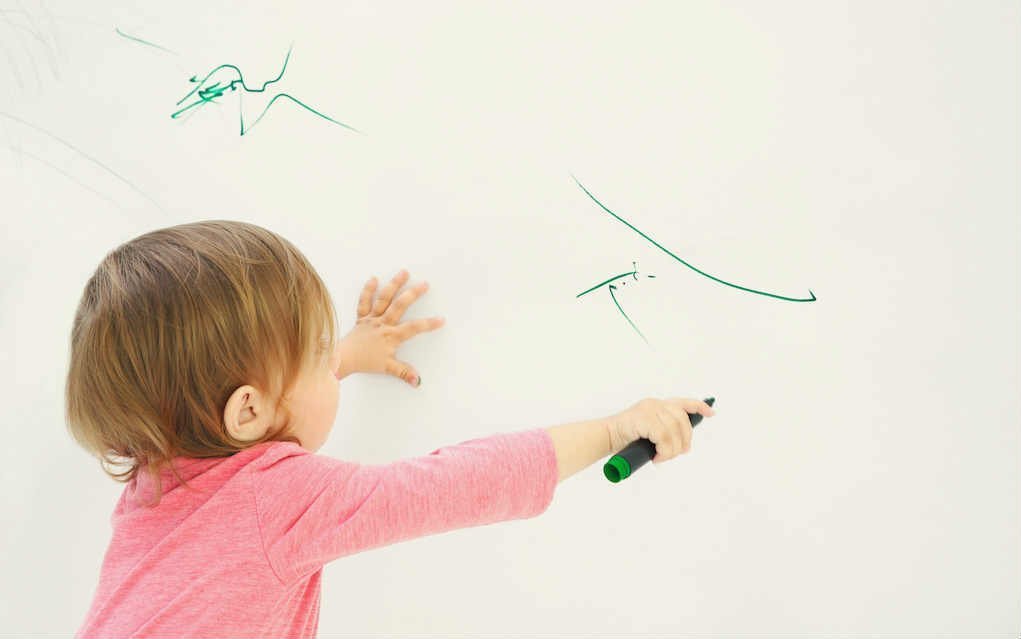
Would you know how to remove permanent marker if your child scribbled on the walls, or coloured in the couch? No, we didn’t either – and it is inevitably what will happen as soon as you turn your back! Discover how to remove permanent marker from a variety of problem areas, including skin, furniture, walls and fabric, with these top tips.
Don’t miss our best content straight to your inbox! Sign up now and get our FREE newsletters packed with fun ideas and things to do with the kids, family-friendly recipes, expert advice, parenting tips and great competitions.
Not many parents are without a “hilarious” tale about when their child got hold of a marker. It’s also rare to find a parent who was quite as impressed with their little one’s handiwork as they were.
Since we know only too well the consequences of a marker mishap, we’ve compiled a list of what works and what won’t, so you can learn how to remove permanent marker from almost anything.
—
 Looking For More?
Don’t miss these essential tips for how to get slime off clothes, furniture and more!
—
Genius Tips on How to Remove Permanent Marker
The good news is that so-called “permanent” markers are water insoluble, and almost all can be removed with a non-water based solvent. Where possible, test the stain remover on an inconspicuous area first to make sure it doesn’t further damage the fabric or material in question.
No matter what sort of item or surface has fallen victim to a permanent marker stain, we hope you’ll find a way to rescue it in the list below.
Skin
Whether it’s the result of some accidental penmanship, some overly enthusiastic colouring, or a deliberate homemade tattoo, permanent marker on skin is an inevitable mishap.
Luckily, permanent marker comes off skin relatively easily with makeup remover wipes or micellar cleanser. Simply rub the wipes in a circular motion over the mark to lift it off the skin.
You can also try nail polish remover, rubbing alcohol, or hand sanitiser to remove the marker.
You May Also Enjoy 15 Common Stains Your Kids Will Have and How to Remove Them
Wood

If your wood furniture or wood floor is carrying the calling card of a little visitor, always test any cleaning method on an inconspicuous spot first to make sure it won’t damage the wood or leave its own mark.
Try isopropyl (rubbing) alcohol, nail varnish remover, or toothpaste (not the gel kind). Blot your treatment of choice onto the stain and let it sit for a few minutes. Dab with a damp cloth to remove the treatment and the stain, continuing until the stain is gone.
Carpet
Ahhh, the horrors of a pale carpet and a permanent marker…! But what if you could save yourself the expense of a professional carpet cleaner?
Removing permanent marker from carpet is simple with a little nail polish remover or rubbing alcohol. Dab (don’t rub) it over the stained area with a clean, damp cloth to lift it, swapping to a clean section of cloth as you go so you don’t transfer marker back into the carpet you’ve just cleaned.
Fabric and Upholstery
If the unwanted new design on fabric has just happened, work fast to stop the stain spreading or transferring further. Put an old cloth, towel, or kitchen paper under the stain so it can’t seep through to the other side of the item.
To remove the stain, dip a cloth or clean sponge in rubbing alcohol. Start by dabbing around the stain, then directly on it. Avoid rubbing, and stick to dabbing to avoid creating a deeper stain or damaging the pile of the fabric.
Keep the old towel or cloths behind the stain in place, as the stain should start to transfer through. Continue dabbing until the stain is removed, then wash the fabric as normal.
While rubbing alcohol is the stain remover of choice, several other products that parents swear by include WD-40, nail polish remover, hand sanitiser, and white vinegar. However, this will depend entirely on the fabric in question.
It’s worth noting that delicates like wool, silk, satin, chiffon or lace shouldn’t be treated in the same way as sturdier fabrics. Expert advice from a dry cleaner is a good idea for delicates.
You May Also Enjoy 15 Clever Laundry Hacks to Save You Time
Leather

Treat permanent marker stains on leather items as soon as possible where you can, and test on a small, inconspicuous area first.
Permanent marker can be removed from leather surfaces using distilled white vinegar. Let the vinegar sit on the stain for a few minutes so it can penetrate, then wipe off the stain with a damp cloth using circular motions.
You can also use aerosol hairspray or sunscreen. Dab or spray your stain remover of choice onto the stain, then blot with a damp cloth to remove. Avoid nail polish remover on leather, as it’s more likely to remove the colour than the stain.
Walls
You’re not alone if your child sees your lovely walls as a giant space to decorate in their own way!
If you’ve discovered some scribbles you’d rather not get attached to, rubbing alcohol can help remove them.
If your walls are painted with an “easy care” or washable paint, a regular kitchen cleaner or rubbing alcohol may work well. A word of warning – take care not to rub too hard on painted walls, especially with anything abrasive, as it may remove the paint (which is why testing first matters).
Use a circular motion to help lift the mark off the wall, then wipe with a damp cloth to remove any residue.
Aerosol hairspray or a magic eraser may also succeed in removing marker stains from your walls.
Laminate Floors or Counters
Laminate is usually quite smooth, making it relatively easy to clean – and also incredibly easy to notice a big scribble on!
To remove permanent marker from laminate surfaces, try vegetable oil, rubbing alcohol, or a magic eraser.
Plastic
Has your child drawn all over a doll’s face, across the front of their toy kitchen, or another plastic surface? Removing permanent marker from plastic is doable if it’s a light stain, but take care, as some solutions may remove the top coating on the surface.
Rubbing alcohol is, again, a go-to choice for many, as well as hairspray, glass cleaner, a dry erase marker, or a combination of baking soda and toothpaste.
Tiles
For smooth tiles, try a magic eraser to remove any scribbles. Ridged, patterned or otherwise textured tiles may need a light scrub to clean.
You May Also Enjoy How To Remove Chewing Gum From Clothes, Hair, Carpet, Car Seats…
Do you have any other tips to share on how to remove permanent marker? Leave a comment below and let us know – we’d love to hear from you!

Frequently Asked Questions
Does rubbing alcohol damage painted walls or wood furniture?
It can, especially on delicate finishes or abrasive scrubbing. Always test on a hidden spot first, and use gentle dabbing rather than hard rubbing to avoid lifting paint or dulling a wood finish.
What’s the quickest way to get permanent marker off skin?
Makeup remover wipes or micellar cleanser usually work fastest. Rub gently in a circular motion, and hand sanitiser or rubbing alcohol are good backup options.
Can permanent marker stains be removed from clothes once they’ve dried?
Yes, though it’s easier to treat them quickly. Dabbing rubbing alcohol onto the stain, working from the outside in and protecting the fabric underneath, can still lift marker from a dried stain, though results vary by fabric.
Is it safe to use nail polish remover on leather?
No – nail polish remover can strip the colour from leather rather than just removing the stain. Stick to distilled white vinegar, aerosol hairspray, or sunscreen instead.
Related Articles
- How to Get Slime Off Clothes, Furniture and More
- 15 Common Stains Your Kids Will Have and How to Remove Them
- 15 Clever Laundry Hacks to Save You Time
- How To Remove Chewing Gum From Clothes, Hair, Carpet, Car Seats…
Save This for Next Time
Marker mishaps always happen when you least expect them. Bookmark this page or save it to your parenting tips board so you’ve got it to hand next time a “masterpiece” appears somewhere it shouldn’t.
Want more handy tips like this delivered straight to your inbox? Sign up for our newsletter for weekly ideas, hacks and advice for family life.