
If someone asked you to picture a safe haven for wildlife, you might imagine a nature reserve, a protected stretch of countryside, or a sanctuary caring for animals that can’t fend for themselves. But your own garden can be just as important. With a few simple changes, any garden — however big or small — can become a genuine haven for birds, bees, hedgehogs and other local wildlife. Here’s how to get started.
YOU MAY ALSO ENJOY: How to Make a Butterfly Garden with Your Kids
Creating a Wildlife Friendly Garden
#1. Hold Off On the Chemicals
[[IMG:1]]
Many of us reach for chemical pesticides to keep our gardens free of aphids, mealybugs and slugs, especially when they’re chewing through vegetable patches and flowerbeds. But these little creatures play an important role too — they’re a vital food source for the birds and other wildlife visiting your garden.
If pests are getting out of hand, try eco-friendly deterrents instead of chemicals. Copper tape wrapped around plant pots can help deter slugs, and a scattering of ground bloodmeal on soil can discourage hungry rabbits.
#2. Feed the Birds
[[IMG:2]]
Some bird species in the UK and Ireland are under threat, so there’s never been a better time to lend a hand. Install a bird feeder stocked with nuts and seeds, and don’t be afraid to share kitchen scraps too — birds are happy to eat cooked potatoes and rice (as long as no salt was added during cooking), along with fat trimmed from meat.
If squirrels keep raiding the feeder before the birds get a look-in, a squirrel-proof feeder is worth considering. Many are weight-activated and close automatically when a squirrel tries to climb on.
YOU MAY ALSO ENJOY: You Will Love These 11 Creative Garden Crafts for Kids
#3. Help the Bees
[[IMG:3]]
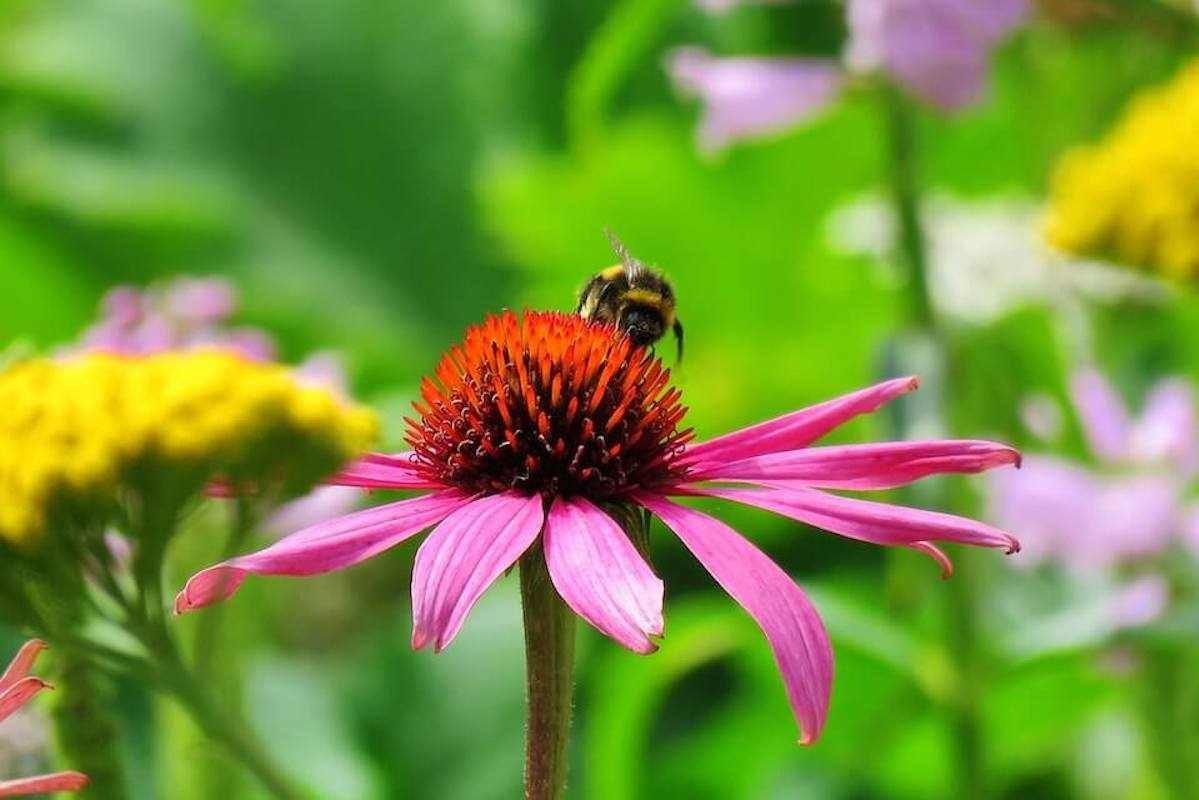
Bees are essential to our food chain — roughly a third of what we eat depends on their work as pollinators. Leave them be where you can, and consider putting out a shallow dish of sugary water for a tired bumblebee that’s had a long day collecting pollen and nectar.
Planting nectar-rich flowers such as Sweet William, English lavender and jasmine will also give bees more reason to visit — and your garden more colour in return.
YOU MAY ALSO ENJOY: Touch, Taste, Smell… These Sensory Plants Will Transform Your Garden
#4. Dig a Pond
Ask any wildlife expert what single change makes the biggest difference in a garden, and many will say a pond. Ponds bring biodiversity to even the most urban gardens, giving amphibians, insects and birds a place to drink, breed and shelter.
If you’re digging one, slope one side gently so tired amphibians can climb in and out easily, and add a shaded spot nearby — under a few rocks, for example — where baby frogs can shelter on hot days.
Always keep young children supervised around water if you install a pond.
YOU MAY ALSO ENJOY: 10 Great Garden Chores for Kids They Are Sure to Enjoy
#5. Hedgehogs
[[IMG:4]]
If a hedgehog visits your garden, you can help by leaving out water, or a simple rehydration mix of one pinch of sugar and one pinch of salt stirred into a cup of water. Avoid milk and bread — both are bad for a hedgehog’s digestion.
Hedgehogs feast on garden pests like slugs, so a prickly visitor is usually a sign there’s plenty for them to eat. They hibernate through the winter, so you’re most likely to spot them on summer evenings.
Hedgehog numbers have been declining in recent years, so anything you can do to make your garden welcoming — leaving wild corners, avoiding chemicals, providing fresh water — is genuinely good news for them, and for your local neighbourhood.
YOU MAY ALSO ENJOY: 10 of the Best Nature Activities for Kids to Do in Your Own Garden
[[IMG:5]]
Frequently Asked Questions
Do I need a big garden to make a difference for wildlife?
Not at all. Even a small garden, balcony or courtyard can help — a single bird feeder, a patch of nectar-rich flowers, or a shallow water dish can make a real difference to local wildlife.
Is it safe to have a pond if I have young children?
A pond can be made child-safe with careful planning — for example, positioning it away from main play areas and always supervising children nearby. Many families successfully combine a wildlife pond with young kids by keeping safety front of mind at every stage.
What shouldn’t I feed hedgehogs?
Avoid milk and bread, as both can upset a hedgehog’s digestion. Fresh water, or the simple sugar-and-salt rehydration mix described above, is a safer option.
Do I need to stop using all pesticides to help wildlife?
Cutting back where you can makes the biggest difference. If pests become a real problem, eco-friendly alternatives like copper tape or bloodmeal are gentler options than chemical sprays.
Related Articles
- How to Make a Butterfly Garden with Your Kids
- You Will Love These 11 Creative Garden Crafts for Kids
- Touch, Taste, Smell… These Sensory Plants Will Transform Your Garden
- 10 Great Garden Chores for Kids They Are Sure to Enjoy
- 10 of the Best Nature Activities for Kids to Do in Your Own Garden
Save This for Later
Turning your garden into a wildlife haven doesn’t happen overnight — bookmark this article or save it to your favourites so you can work through the ideas at your own pace, one small change at a time.
Get More Ideas Like This
Want more family-friendly outdoor ideas delivered straight to your inbox? Sign up for the MyKidsTime newsletter for weekly activity ideas, seasonal inspiration and things to do with the kids.