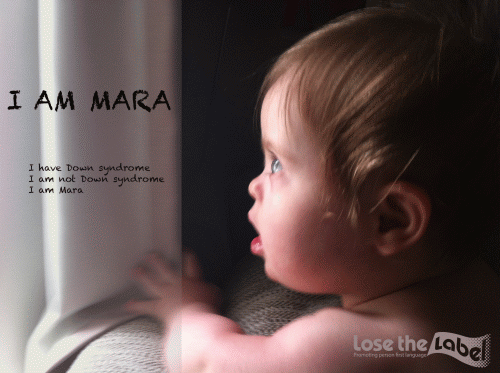
Michelle Clark, mum of Mara, was tired of hearing her daughter called a “Down’s baby.” So she launched a campaign called Lose the Label, which set out to change the way we talk about people with Down syndrome. Here, she tells us about it in her own words.

What is Lose the Label?
 Lose the Label is a campaign promoting the use of person-first language. It’s here to show that each individual with Down syndrome is exactly that — an individual, a person with their own likes and dislikes, living their own life as uniquely as you and I.
Language is inherited. Lose the Label doesn’t set out to point fingers or embarrass anyone who may have used limiting language in the past. It simply asks you to think about the language you use when referring to people with Down syndrome and, on reflection, consider language that’s more aligned with the inclusive society we live in.
Who Is It For?
Society. Everyone. You, me. Our understanding of Down syndrome has come a long way, but we still sometimes use language that defines people by their diagnosis, and there’s really no reason to keep doing that. I have a lazy eyelid — nobody calls me “Lazy Eyelid Woman.” At least, not until now!
Why Is It Different?
 Lose the Label uses real images of real people living their everyday lives, showing how unique and individual each person with Down syndrome is — how each person looks and behaves much more like their own family than like any other person with Down syndrome. Each image carries a simple message that asks nothing of the viewer but a moment’s attention.
It isn’t pitying and it isn’t patronising. It’s simply showing individuals with Down syndrome without the misconceptions. I believe people are generally good, and most are simply unaware that the language we’ve inherited can be limiting and hurtful to others.
Changing language we’ve inherited from a time when Down syndrome was poorly understood won’t happen overnight, but it isn’t impossible. Lose the Label offers “what to say” guidance to help anyone who wants to change their language find a suitable alternative.


See more of the Lose the Label photos here.
Tell Us in 5 Words Why It Matters
A diagnosis doesn’t define anyone.
Find out more about the Lose the Label campaign on Facebook at www.facebook.com/Losethelabel and on X (formerly Twitter) at @Lose_the_label.
If you would like to include a loved one’s photograph in the campaign, you’ll find instructions on what’s required here.
Frequently Asked Questions
What does “person-first language” mean?
It means describing someone as a person first, and their diagnosis or condition second — for example, “a person with Down syndrome” rather than “a Down’s baby.” The idea is that a diagnosis is one part of someone’s life, not their whole identity.
Who started Lose the Label?
The campaign was launched by Michelle Clark, mum to Mara, after she grew tired of hearing her daughter labelled by her diagnosis rather than known as herself.
How can I get involved or share a photo?
You can follow the campaign on Facebook and X to see the images and messages it shares. If you’d like to submit a loved one’s photo, the campaign’s Facebook page has the instructions on what’s needed.
Is this only relevant to families affected by Down syndrome?
No — the campaign’s message about thoughtful, person-first language is something every parent, teacher and community member can take on board, regardless of personal connection to Down syndrome.
Related Articles
- Talking to Kids About Difference and Disability
- Building an Inclusive Playgroup or Classroom
- Real Parenting Stories: Raising a Child with Additional Needs
Before You Go
What are your thoughts on how we label children? Tell us in the comments below.
Enjoyed this story? Browse more real parenting stories and family features on MyKidsTime for more perspectives worth sharing.
Stay in the Loop
Want more stories like this delivered straight to your inbox? Sign up for our free newsletter for weekly parenting ideas, family stories and things to do — no pressure, just useful stuff when you have a moment to read it.