Cooking with your little one, and letting them help out with real jobs in the kitchen from an early age, has benefits that far outweigh any mess along the way. It takes patience, but it’s worth it — and one day you might just find them cooking dinner for you!
Cooking together helps children practise simple maths and problem-solving, builds fine motor skills and muscle control, and gives them confidence and independence in the kitchen. It’s also a wonderful way to foster a lifelong love of cooking and healthy eating. Best of all, it’s genuinely fun for both of you.
These 12 useful kids cooking skills are easily mastered by preschoolers and make a great starting point for your little chef’s journey.
You may also enjoy: Teach Your Child to Cook Safely with These 17 Top Tips
Kids Cooking Skills for Young Children
1. Washing
Get your little one to help wash vegetables and fruit. It’s a simple job that teaches them the names of different foods and introduces basic hygiene skills. Don’t forget the washing up afterwards — fill the sink and let them wash any non-breakable items. This also helps build language skills as they learn the names of ingredients and utensils.
2. Mashing
Soft fruit like bananas can be mashed easily with a fork, perfect for recipes like banana bread. Slightly older preschoolers can try mashing vegetables with a potato masher. This helps develop small muscle control and hand-eye coordination.
3. Spooning
Let your little one spoon ingredients into the mixing bowl, sieve, or onto the weighing scales. This is great for fine motor skills, and it introduces basic maths as they count out spoonfuls.
4. Kneading
[[IMG:1]]
Once the dough is ready for kneading, let your little one sprinkle on some flour and get stuck in. You’ll likely need to step in to finish the job, but they’ll have great fun kneading and pulling at the dough — all while building muscle control.
5. Stirring
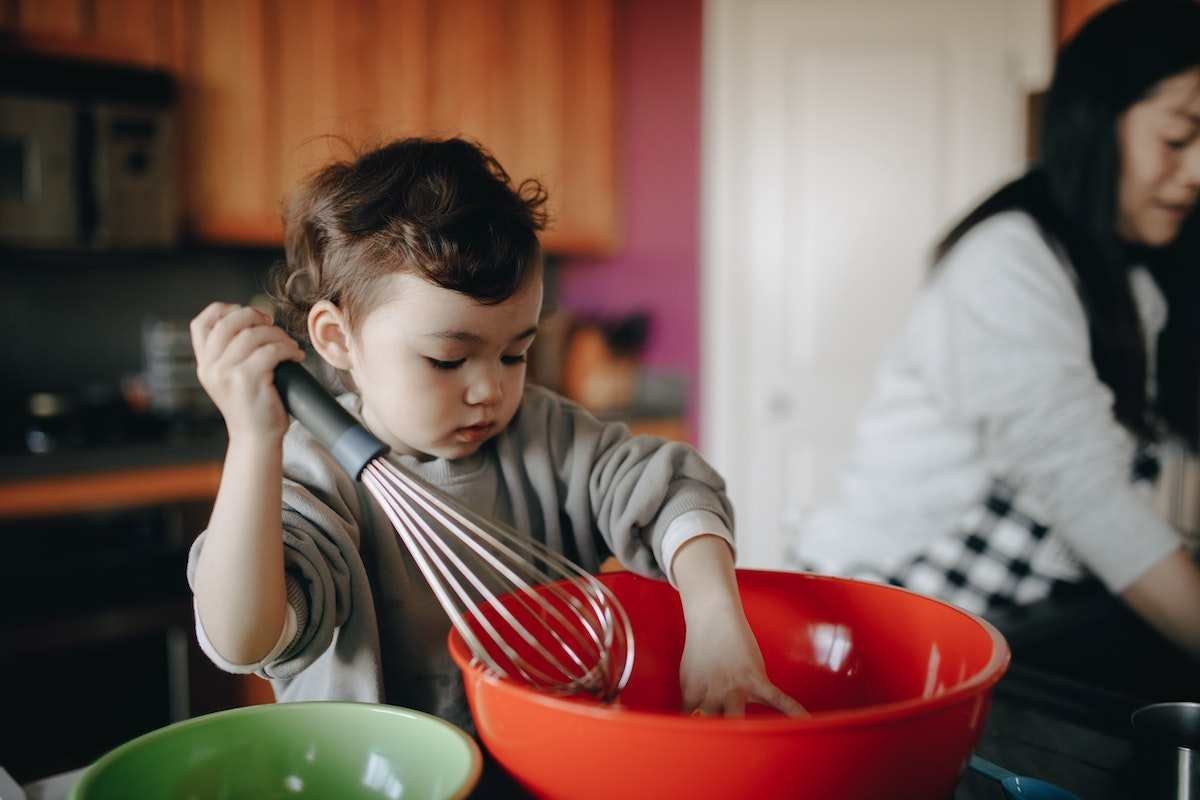
Give your child a wooden spoon to help stir cool ingredients such as cake mix. It’s a gentle lesson in taking care, since stirring too vigorously tends to end in spills.
6. Sifting
Balance a sieve over the mixing bowl and let your little one spoon in the dry ingredients. Show them how to gently shake or tap the sieve to help the mixture pass through. Counting the spoonfuls needed to fill the sieve is another easy way to sneak in some maths practice.
7. Weighing
Even if you need to adjust the amounts afterwards, let your little one spoon ingredients onto the scales until they reach the right weight. This supports cognitive development as they learn to predict and problem-solve.
You may also enjoy: 11 of the Best Cooking Games for Kids and Budding Chefs
8. Spreading
Your little one can help spread icing on cakes and buns, or sauce on savoury dishes. Once they’ve mastered spreading butter on bread, they can even build a simple sandwich themselves — a small task that builds real independence and confidence.
9. Sprinkling
[[IMG:2]]
Often the favourite part of any recipe! Let your child sprinkle raisins into dough, flour onto the worktop before rolling, cheese onto pizza or lasagne, or decorations onto finished cookies and buns. It’s a simple job that supports both maths and fine motor skills.
10. Bashing
If you’re cooking meat such as chops or chicken, let your little one use a meat tenderiser to bash it out for you — cover it with cling film first, and make sure hands are washed thoroughly afterwards. For a biscuit base, pop the biscuits into a sealed food bag and let them bash away with a rolling pin. Either way, it’s a good opportunity to reinforce kitchen hygiene.
11. Cutting
Keep sharp knives well out of reach, but soft fruit like strawberries can be chopped with a blunt knife under supervision. Plastic cookie cutters are a fun, safe way to shape most doughs. Both activities help develop fine motor skills.
12. Rolling
A small rolling pin is a great investment for little hands — let them roll out pastry or bash biscuits with it. Once rolled, they can shape the dough and create their own goodies for everyone to enjoy.
Always follow basic kitchen safety and keep hot liquids and ingredients well out of reach of little ones. Remember: mess can always be cleaned up, and the most important thing is to have fun together.
You may also enjoy: 5 Simple Kitchen Safety Rules for Knives
[[IMG:3]]
Frequently Asked Questions
What age can toddlers start helping in the kitchen?
Most children can start with simple, supervised tasks like washing fruit or sprinkling ingredients from around age two or three. Match the task to your child’s current coordination and attention span, and build up from there.
What’s the safest first cooking task for a preschooler?
Washing fruit and vegetables or spooning ingredients into a bowl are gentle starting points. They involve no sharp tools or heat, and they’re easy for little hands to manage successfully.
How messy will cooking with a preschooler get?
It’s fair to expect some spills and flour clouds! Covering the worktop, using aprons, and accepting a bit of mess as part of the process will make the experience more relaxed for everyone.
Do I need special equipment to cook with my child?
Not really — a step stool to bring them up to counter height, a child-safe rolling pin, and a blunt knife for soft fruit are useful, but most tasks can be done with equipment you already have at home.
Related Articles
- Teach Your Child to Cook Safely with These 17 Top Tips
- 11 of the Best Cooking Games for Kids and Budding Chefs
- 5 Simple Kitchen Safety Rules for Knives
- Easy Banana Bread Recipe for Little Bakers
Save This for Your Next Kitchen Session
Cooking with preschoolers works best when you can dip back in whenever you have a spare half hour. Bookmark this article or save it to your parenting board so you’ve got a ready list of age-appropriate kitchen tasks whenever inspiration strikes.
Get Weekly Ideas Straight to Your Inbox
Enjoyed these kitchen skills for little chefs? Sign up to the MyKidsTime newsletter for more simple activity ideas, recipes, and things to do with the kids delivered to your inbox every week.