
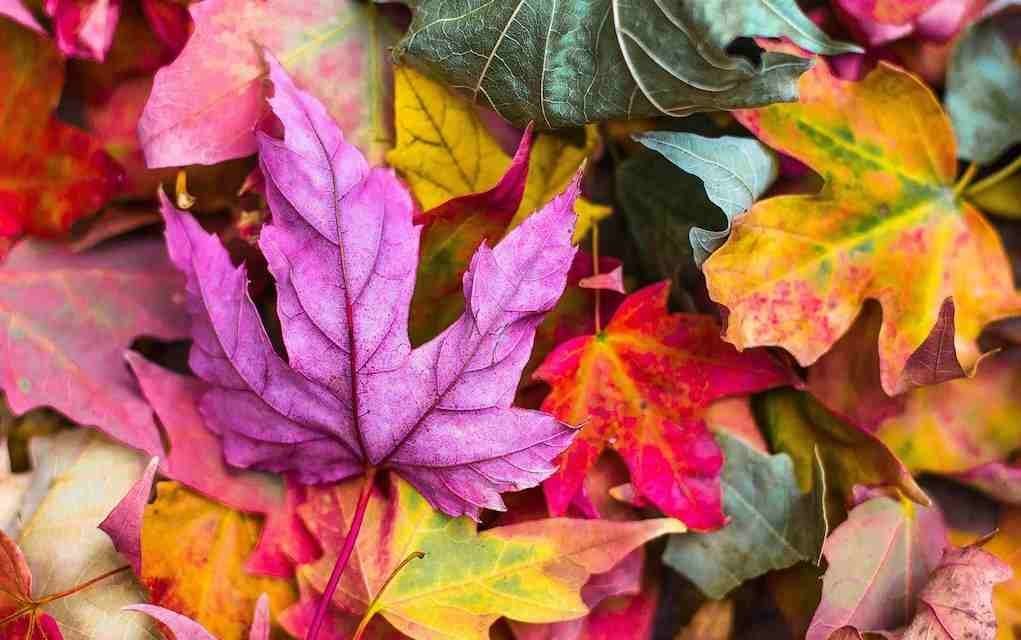
Autumn is a wonderful time of year, when nature puts on a spectacular show of colour in the trees and hedgerows around us. It’s easy to enjoy a shuffle through golden autumn leaves without ever wondering where all that colour comes from. But it’s a brilliant bit of science for kids to explore together — so let’s find out why autumn leaves change colour!
[[IMG:1]]
YOU MAY ALSO ENJOY: 15 Easy and Eye-Catching Leaf Craft Ideas for Kids
What Gives Leaves Their Colour?
The lovely green colour of most leaves comes from a pigment called chlorophyll. Chlorophyll uses sunlight to convert water and carbon dioxide into energy (sugar) for the plant.
As the days grow shorter heading into winter, the amount of sunlight drops — and so does the chlorophyll in tree leaves. More precisely, the pigment starts to break down and isn’t replaced. Once the green fades away, other pigments that were there all along finally get their moment to shine:
- Carotenoids give leaves their yellow and orange colour.
- Anthocyanins give leaves their red colour.
- Tannins give leaves their brown colour.
Within this system of pigments, there’s a bit of a pecking order.
Why Do Leaves Change Colour?
Once chlorophyll fades, what determines the colour we actually see?
1. Carotenoids are the same pigments responsible for the orange colour of carrots. If carotenoids are present in a leaf, they tend to dominate, giving the leaf a yellow or orange colour.
2. In the absence of carotenoids, anthocyanin takes over. This is the same pigment found in red onions, red grapes, red apples and red cabbage, and it’s a natural pH indicator — meaning it changes colour depending on how acidic or alkaline its environment is. Early in autumn, sugar levels in the leaves tend to be high, which raises acid levels and strengthens the red colour of anthocyanin where it’s present.
3. By the end of autumn, the leaves are dying off, and both carotenoid and anthocyanin levels fade too. That leaves one pigment to dominate — the brown pigment tannin, the very same pigment that gives a cup of tea its colour!
YOU MAY ALSO ENJOY: Download Your FREE Autumn Scavenger Hunt for Kids
7 Factors that Influence Leaf Colour
So why do some places get really spectacular autumn displays while others fall a bit short? A number of factors play a part:
1. The type and age of the trees. Some trees are known for particularly vibrant colour displays, from yellow to red to purple — acers (maple trees) are a great example.
2. The type of soil the trees grow in affects the general health of the tree, its leaves, and the final colour display. Nitrogen levels and soil acidity are both important factors here.
3. The summer weather also has an influence. Too little or too much sun earlier in the year can reduce the intensity of the autumn display, and droughts or floods can have a negative impact too.
4. Sugar levels in the tree as the seasons turn can be a big factor in the strength of the leaf colour.
5. Air and soil pollution affect the overall health of the tree and how evenly its leaves colour up. Some tree species cope with pollutants better than others.
6. Autumn weather conditions matter a lot too — the best colour displays tend to happen after dry, sunny autumn days followed by cool, crisp autumn nights.
7. How long the leaves stay on the tree. If strong winds arrive too early in the season, leaves can fall before they’ve had the chance to show off their full range of colour.
So next time you’re crunching through a pile of autumn leaves, you might just find yourself thinking about carrots, red cabbage and cups of tea!
YOU MAY ALSO ENJOY: 8 Fun Autumn Activities for Preschoolers
FAQs: Autumn Leaves and Science for Kids
Why do leaves change colour in autumn?
As days get shorter, trees get less sunlight and stop producing the green pigment chlorophyll. Once the green fades, other pigments already in the leaf — carotenoids, anthocyanins and tannins — become visible, giving us yellows, oranges, reds and browns.
What pigment makes leaves turn red?
Anthocyanin is responsible for red leaves. It’s the same pigment found in red cabbage and red apples, and it becomes more vivid when sugar levels (and therefore acidity) in the leaf are high early in autumn.
Why do some autumns have better colour than others?
It comes down to a mix of factors: the type of tree, soil conditions, summer weather, sugar levels in the leaves, pollution, and the autumn weather itself. Dry, sunny days followed by cool nights tend to produce the best displays.
Is this a good science topic to explore with kids?
Yes — it’s a lovely hands-on introduction to plant biology and pigments. Collecting leaves on a walk and talking through why each one has changed colour is an easy, screen-free way to bring science to life for kids of any age.
Related Articles
- 15 Easy and Eye-Catching Leaf Craft Ideas for Kids
- Download Your FREE Autumn Scavenger Hunt for Kids
- 8 Fun Autumn Activities for Preschoolers
Browse More Learning Ideas
Loved this bit of autumn science? There are plenty more seasonal learning ideas and activities to explore on MyKidsTime — bookmark this page or save it for your next nature walk with the kids.
Get Weekly Ideas Straight to Your Inbox
Want more simple science, activities and things to do with the kids delivered to you every week? Sign up for the MyKidsTime newsletter for fresh ideas, straight to your inbox.